
PACIFIC CONSULTANTS deeply supports the concept of "World Bosai Walk TOHOKU+10," organized by the World BOSAI Forum, and its desire to spread the message of "Build Back Better" to the world, and is sponsoring this walking event.
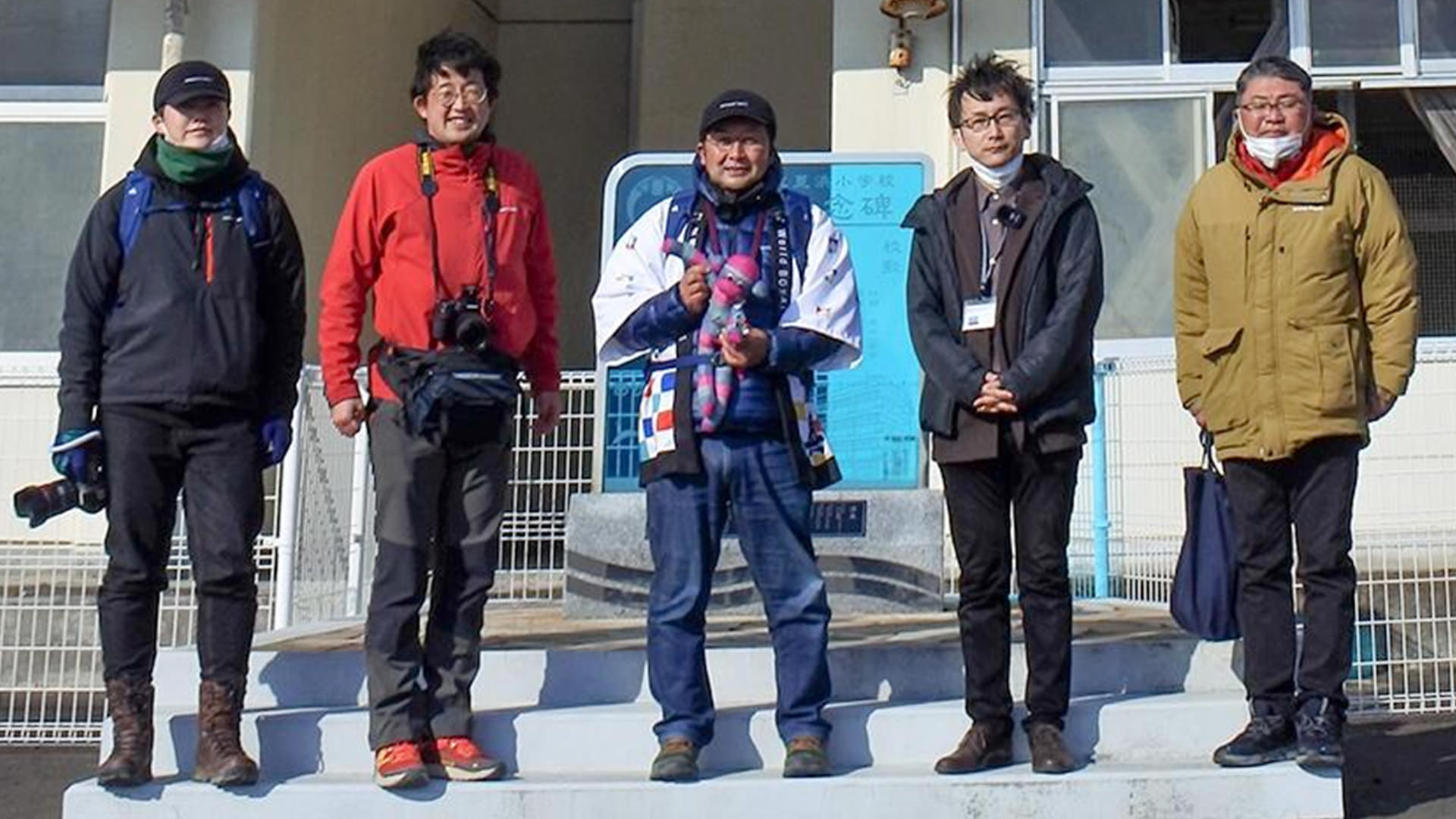
*Main photo: On the day of the interview, the walking team visited the Sendai Municipal Arahama Elementary School, a site of earthquake damage. They were guided by Mr. KAWAMURA, a local resident. (From right: Mr. YOSHINO, secretary-general of World BOSAI Forum; Mr. KAWAMURA, guide; Mr. ONO, Executive Manager of World BOSAI Forum; Mr. SAKAMOTO, PACIFIC CONSULTANTS (currently seconded to International Research Institute of Disaster Science, Tohoku University); and Mr. Feng, Meiji University
INDEX
- We interviewed the members on their 13th day after starting the walk!
- Focus on the "people" working on recovery
- With a sense of responsibility and resolve, where should we send our children to safety?
- Walk is now broadcasting to the world!
We interviewed the members on their 13th day after starting the walk!
Professor ONO, WBW has finally started!
The first two or three days after the start were physically tough. As my body gradually adapted, there were days when I felt like I hadn't walked enough. After the walk started and was featured on TV, people driving by would sometimes call out to me. I was happy when they would then give me a tour of the area.
I was taken to a small JR station called Suekawa Station (Hisanohama-machi, Iwaki City, Fukushima Prefecture). The station building, which was constructed about 100 years ago using timber cut down from the mountains, has apparently been used as a filming location for movies. It seems that the local residents take good care of it, as there were beautiful flowers in bloom. In addition to this, I was able to hear stories about the time of Great East Japan Earthquake from the district head and various other people I met in different places. I was reminded once again how important it is to go to the actual locations, meet the local people directly, and listen to their stories.
Interacting with local people can change what you thought you understood intellectually
During my walks so far, I've heard stories from many different people. The one that has stayed with me the most was the one I heard at the disaster-stricken Ukedo Elementary School in Namie Town, Fukushima Prefecture. Everyone at Ukedo Elementary School evacuated after the earthquake and was safe, but the fire brigade continued their rescue and search operations for survivors. However, on the evening of March 11th, due to the Tsunami warning and the approaching sunset, they had to temporarily halt their activities, even though they knew there were still survivors and could hear their voices. The next day, they planned to resume rescue operations at sunrise, but at 6 a.m., just before resuming, an evacuation order was issued due to an emergency declaration at the nuclear power plant, forcing them to abruptly halt and evacuate. They were unable to save familiar faces from the community who might still be alive. The fire brigade members reportedly expressed their "regret." Hearing this, I couldn't stop crying. In the end, they were only able to return to the area three months later, after the evacuation order was lifted.
In Fukushima, lives that could have been saved were not. I thought I understood this intellectually, but after actually hearing the stories, I had a renewed sense of realization. Despite having experienced such terrible hardships, there were people in Namie Town who were working hard towards recovery. I asked them why they were able to work so hard, and where that energy came from. Although each person had their own circumstances, what they all said in common was the desire to "not for themselves, but for the people who will carry the future—sons, daughters, and grandchildren."
Thinking "for someone else" becomes a source of energy
What I've come to understand through meeting people who are working hard to rebuild is that people find energy in thinking "for someone else." Since the walk started, I've been asked all over, "How did you manage to rebuild?" One sushi restaurant owner said that his son has entered university in Tokyo, and he reopened his restaurant because he still needs to earn money for his son's sake.
Also, during this walk, I made it a point to stay at local guesthouses, and one of the people I met there had lost her daughter and decided to reopen the guesthouse for the sake of her grandchild. Despite having experienced Great East Japan Earthquake and suffering such hardship, I wonder where the energy to persevere and recover comes from. I hope to continue to be touched by the spirit of the people I interact with during these walks.
An opportunity to reconsider why we are conducting disaster prevention research here
After the walk is over, I'd like to compile the videos into a book, if possible. I also want to share it with researchers at International Research Institute of Disaster Science, Tohoku University. I want to convey the current situation as it truly is.
Researchers are usually limited to their own academic fields, but our research institute was established with recovery funds, so we need to conduct research "for regional recovery." Ten years after the earthquake, I think it has been a good opportunity to return to basics and reconsider why we are conducting disaster prevention research here.
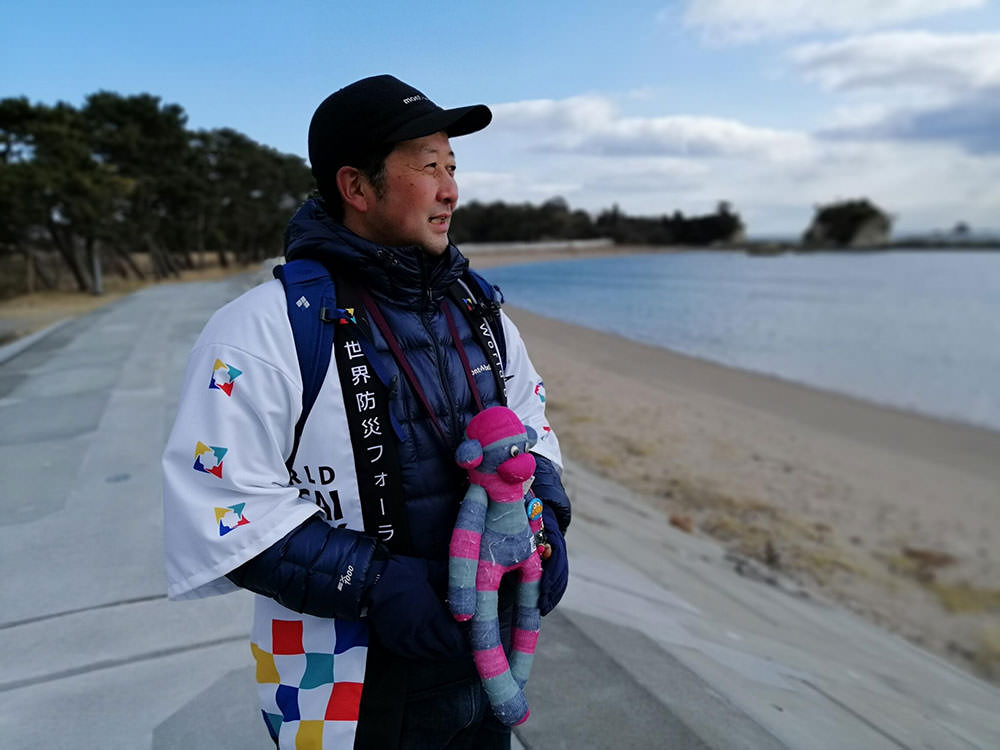
Mr. SAKAMOTO, how is your 13th day of walking going?
It was tougher and more difficult than I expected. It was more challenging than I imagined, but I can still walk. I'm okay. This walk wasn't just about walking; I met people, visited memorial museums, and made many new discoveries, including places I'd been to before. At the elementary school memorial museum, I heard various stories about the earthquake, and at different elementary schools, I heard stories about places where evacuation was successful, places where it wasn't, and many stories that made me feel sad. However, everyone welcomed me warmly everywhere I went, and listening to their stories showed me the wonderful and attractive aspects of the area where I live. It was really enjoyable to walk while feeling that. It was also quite fun walking while listening to Mr. ONO's jokes.
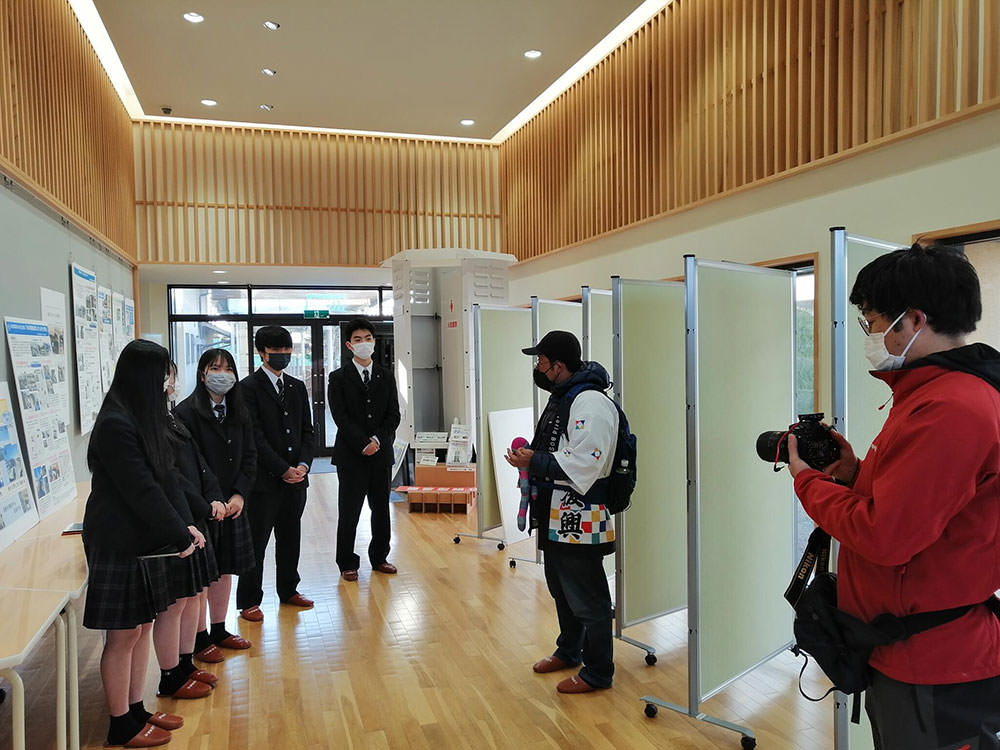
With a sense of responsibility and resolve, where should we send our children to safety?
The stories I heard at the elementary schools (memorial halls) that are earthquake-damaged sites all deeply resonated with me. At Ukedo Elementary School in Namie Town, Fukushima Prefecture, everyone was saved thanks to the teacher's decision to go up to a hill and the students knowing a shortcut. At Nakahama Elementary School, another earthquake-damaged site in Yamamoto Town, there was no high ground to escape to, so they had no choice but to flee to the roof of the two-story school building. Fortunately, they were not swallowed by the Tsunami, but because it took a long time for the Tsunami to recede, all the students spent the night on the roof in the cold. The principal at the time, who made the decision to evacuate to the roof, must have felt immense pressure wondering what would happen if the water reached above the second floor, yet he still made the decision to send the children to the roof. I can't express how amazing it was with just the word "amazing," but I truly felt it was incredible. And I was so glad that everyone was saved. Also, the head of a certain district said that he had to identify the bodies because he knew all the residents' faces. It was something he really didn't want to do, but he resolved that it was his responsibility. From that story, I deeply felt the mayor's determination and sense of responsibility.
I want to hear many more stories!
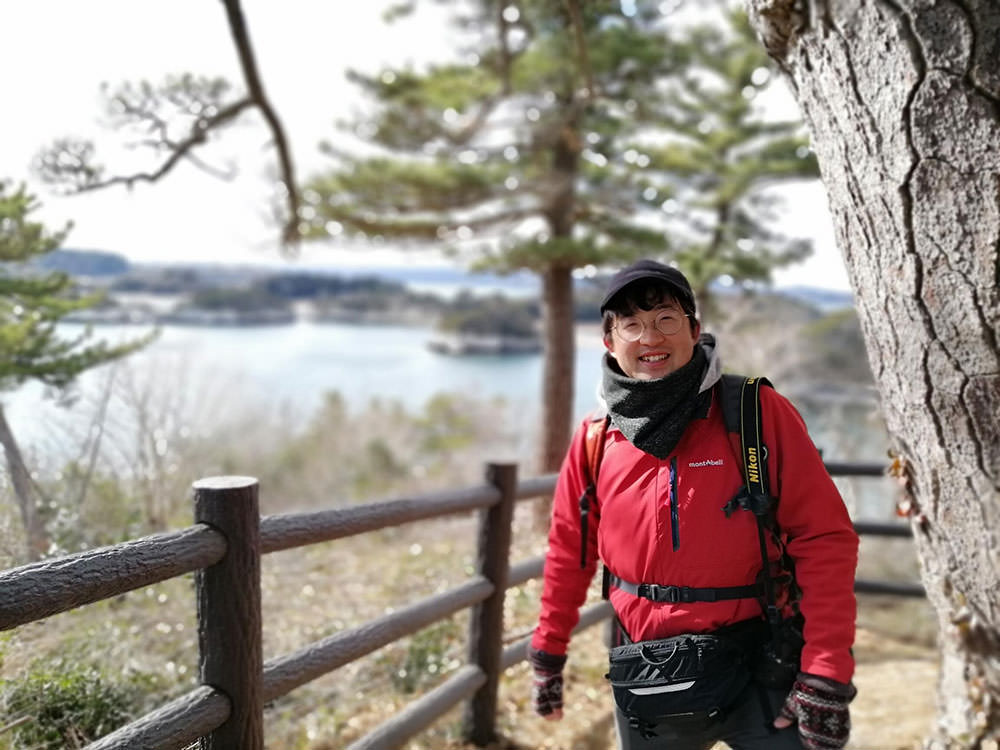
Through this walk, I want to hear more and more stories from people in various regions. I've been involved in disaster prevention work before, but I've never had the opportunity to listen to local people's stories in such detail. Coming here, I've truly come to realize that disaster prevention is about people's lives. And it's not just about disaster prevention; I'm really glad I was able to hear about so many things I don't usually deal with in my work, such as the fisheries cooperative, the town, the nuclear power plant, and the maintenance of roads and embankments. I think my perspective on work will change from now on. Kamaishi, which I'll be going to next, is famous for its advanced disaster prevention education, so I want to exchange opinions with local people with the perspective of what they are doing there and whether it can be applied to other regions. I also want to hear not only from people who originally lived in the area, but also from people who came from outside the area to support recovery. I want to hear the thoughts of people our age who are trying to do something new in a place they have no connection to.
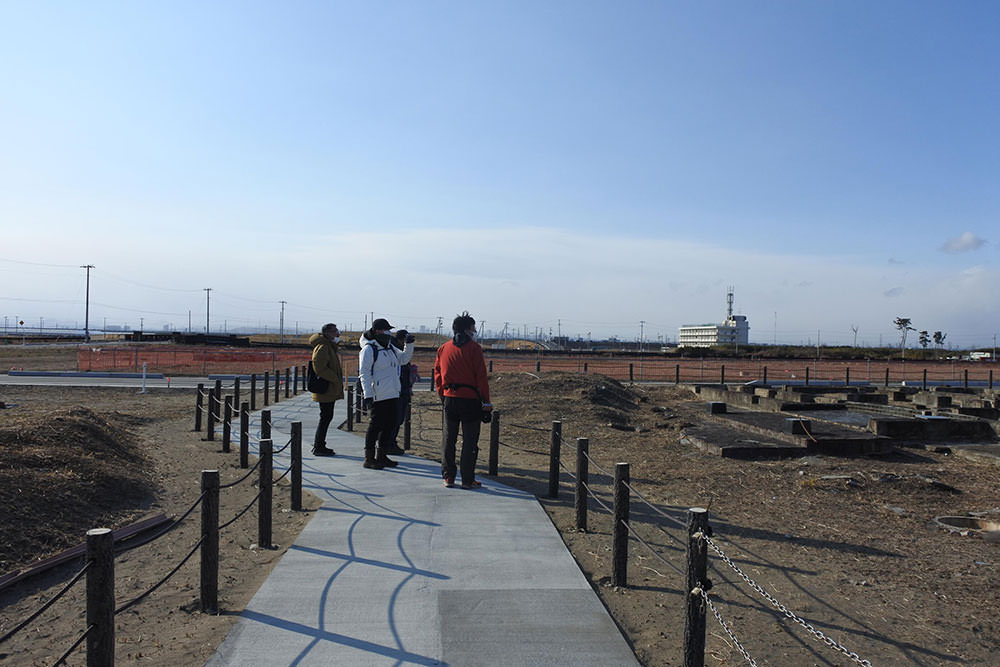
Walk is now broadcasting to the world!
Updates on the walk are being shared on World BOSAI Forum's website and social media (Twitter, Facebook, Instagram, YouTube). Where are they walking now? What kind of scenery are they seeing? If you are interested in the current situation and recovery in Tohoku, please follow and subscribe to the channel.
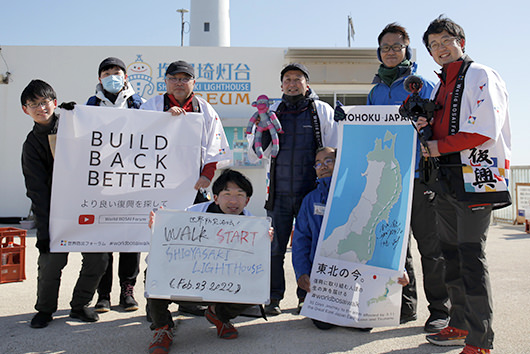
Our company's Disaster Prevention Dept., Masashi SAKAMOTO (currently seconded to Tohoku University), will be walking for approximately 40 days together with Professor ONO from International Research Institute of Disaster Science, Tohoku University University, who is also Representative of Board of Directors of World BOSAI Forum. If you see them during the walk, please say hello; it will be a great encouragement for us!