

How can we address increasingly complex social challenges by transcending industry boundaries, such as architecture, civil engineering, and urban planning? Nikken Sekkei and PACIFIC CONSULTANTS, who have been working together on the integrated development of Shibuya Station and the surrounding area for over 20 years, held a study group where experts from different fields came together to discuss their vision for the future.
INDEX
- Digital: 2070 will manage the natural environment with global scanning technology
- Carbon neutrality: Well-being created by a fair transition process
- Air mobility: The revival of island nation, Japan - The "exciting" decline of regional areas
- A future vision to uncover challenges and technologies that do not yet exist
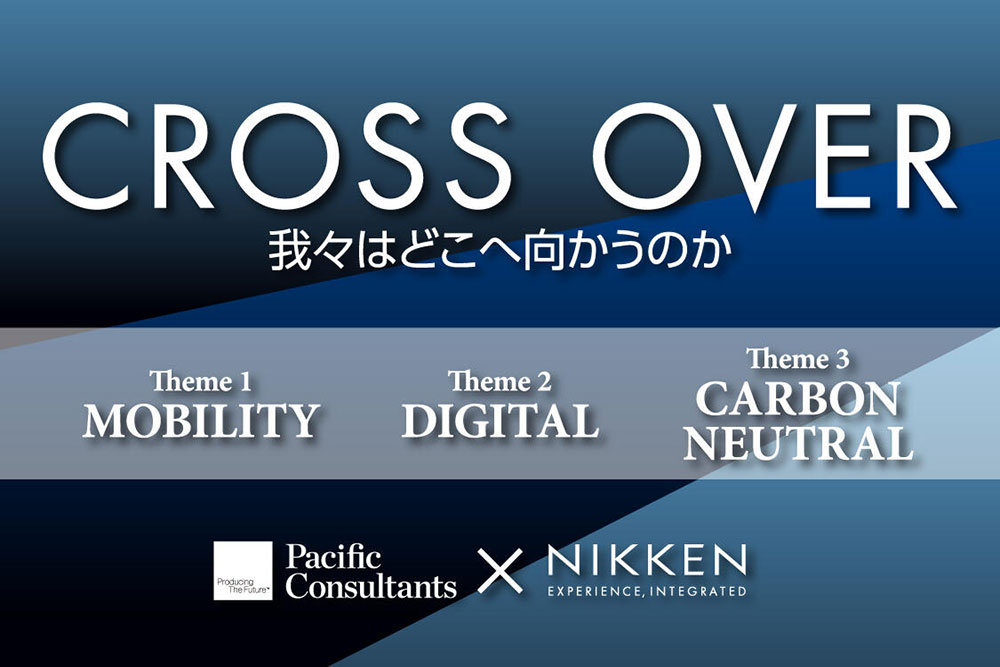
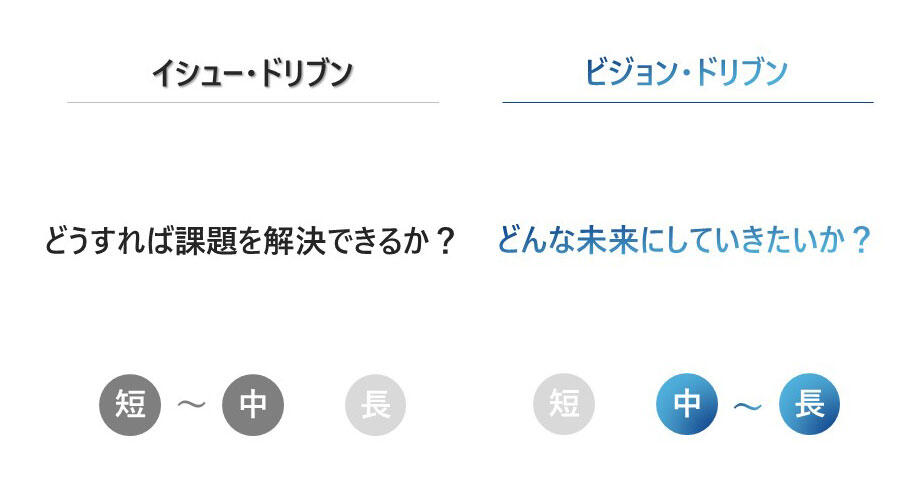
The research themes are "digital," "carbon neutrality," and "air mobility." A working group (WG) comprised of engineers from two companies with diverse expertise in areas such as architectural design, electrical engineering, river engineering, and PFI (Private Finance Initiative) developed a vision for the future of cities. This is an attempt to capture the challenges that emerge from designing the future, transcending the time axis, and to create a vision-driven urban plan.
Digital: 2070 will manage the natural environment with global scanning technology
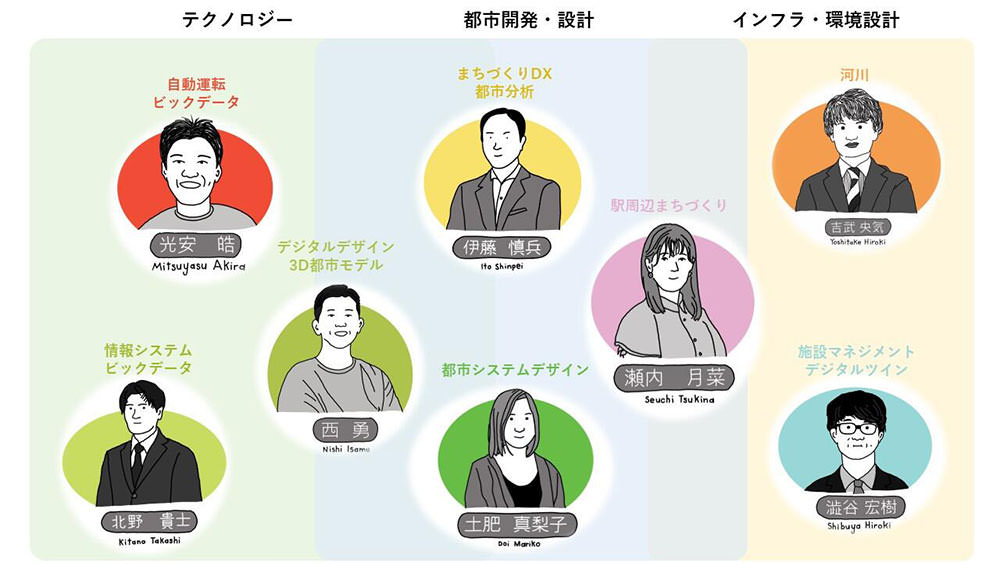
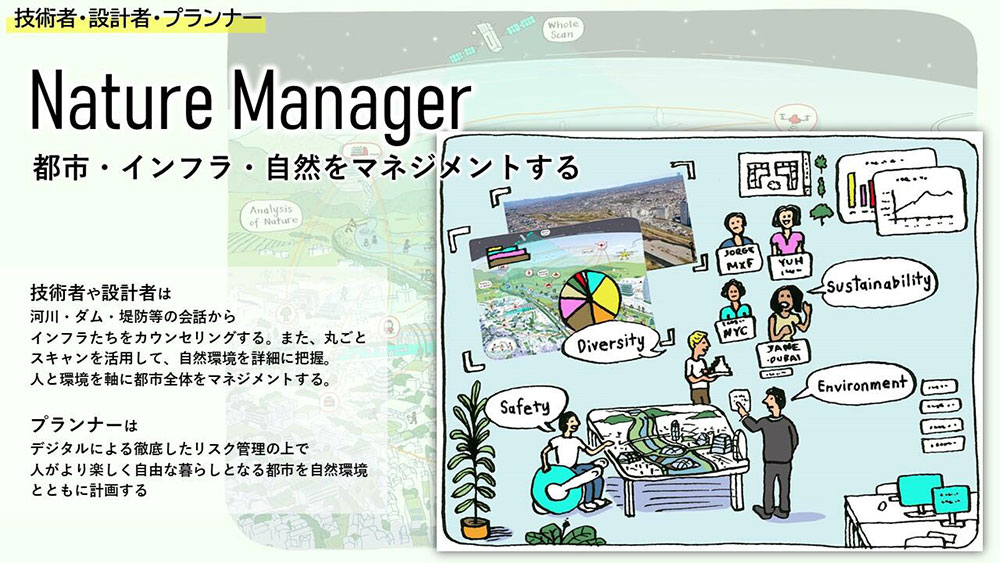
In this working group, we envision what life will be like 50 years from now, shaped by advancements in digital technology, and the occupations that will support those cities. First, we anticipate that by 2070, a technology called "global scanning" will be developed. This will enable us to understand the global environment by scanning not only the Earth's surface but also underwater and other areas with higher resolution and frequency, making it possible to predict and respond to natural disasters and other events.
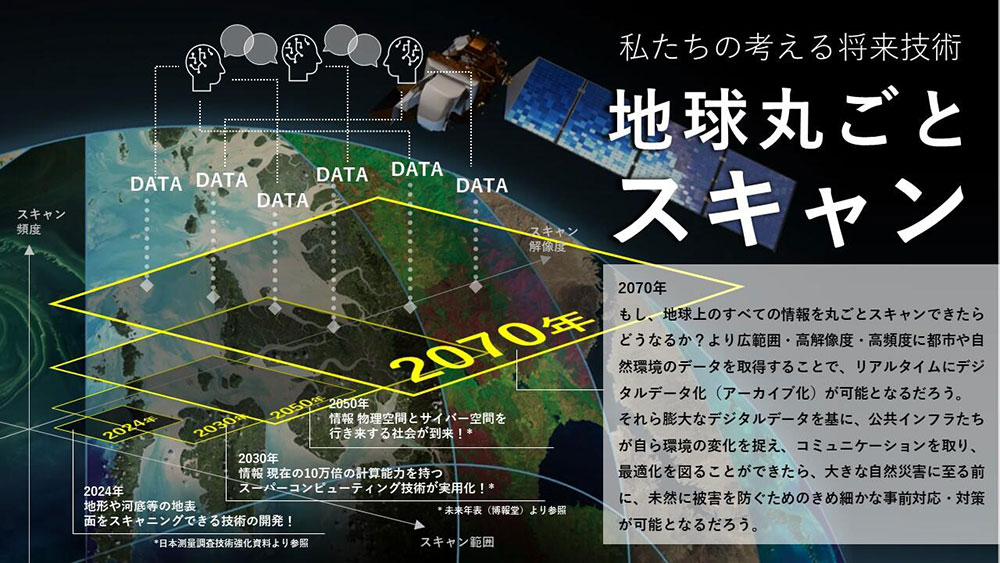
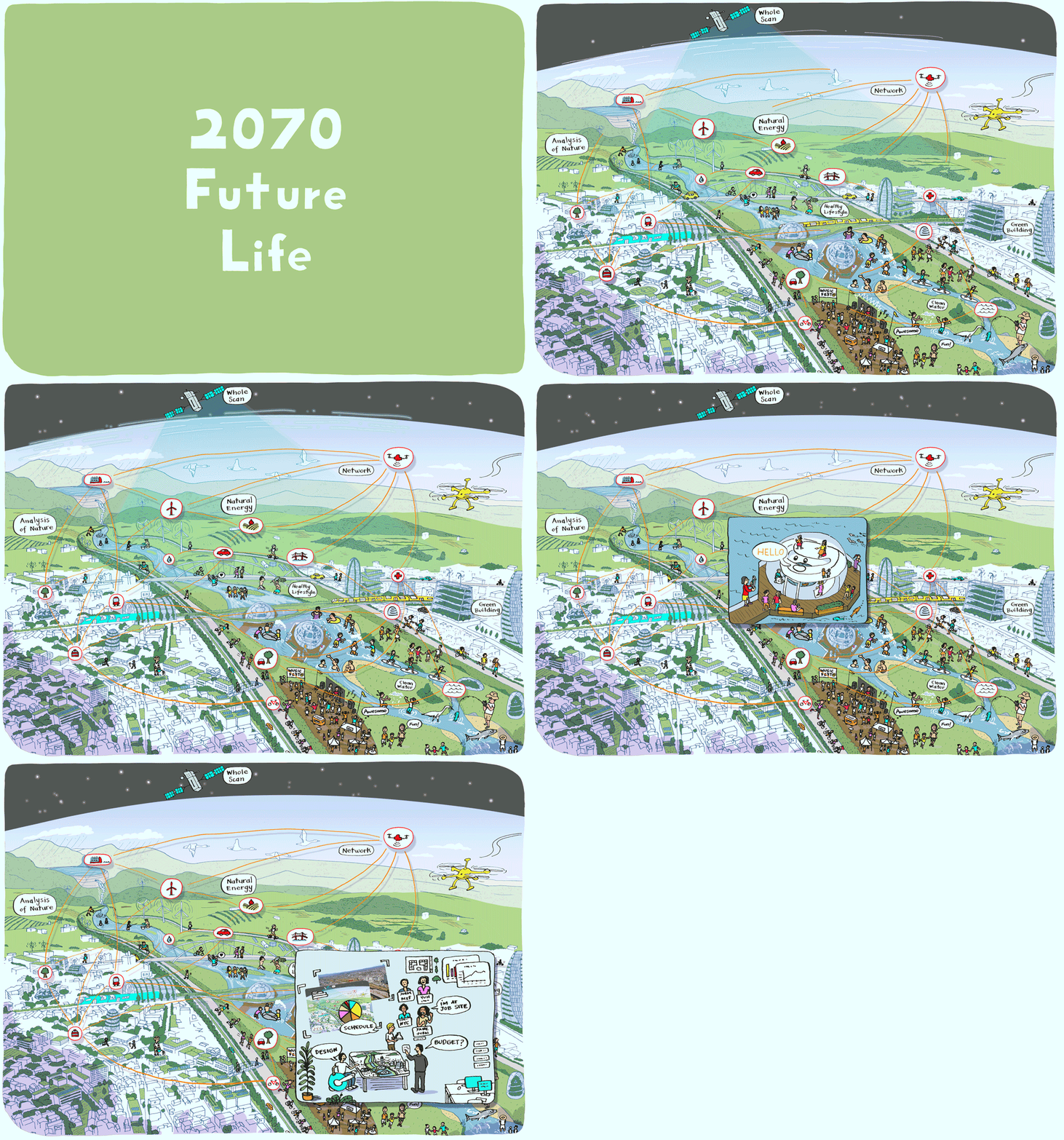
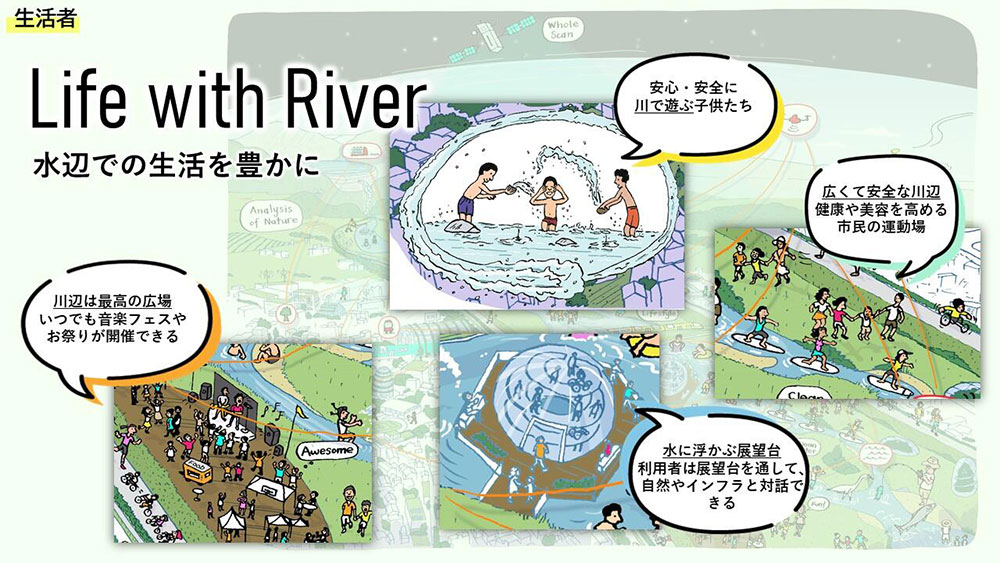
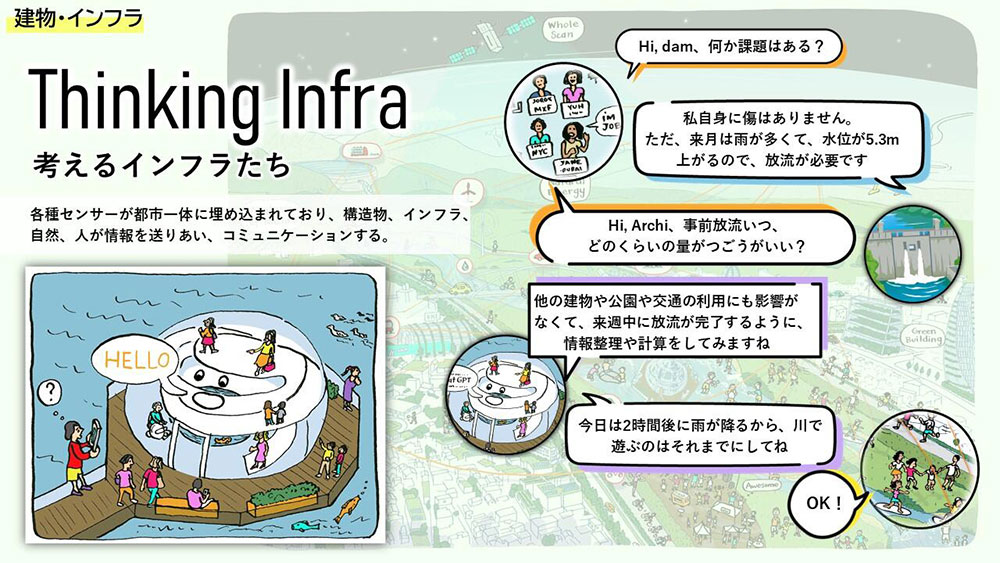
This will create new professions that involve highly sophisticated management of the natural environment and designing vibrant cities in harmony with nature. For example, it will make it easier to hold activities such as festivals along riverbanks, which are often considered difficult to implement, and it will also propose floating observation decks. Furthermore, AI-powered infrastructure called "Thinking Infra" will be created, which will enable safer and more secure living in riverside parks and other areas downstream by sharing information between infrastructure components, such as weather forecasts and dam water levels.
Carbon neutrality: Well-being created by a fair transition process
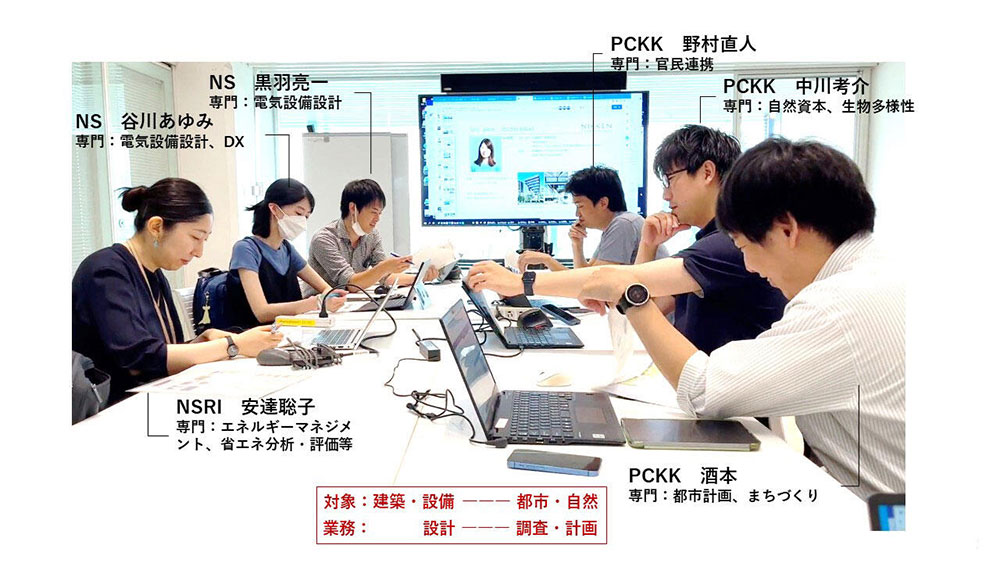
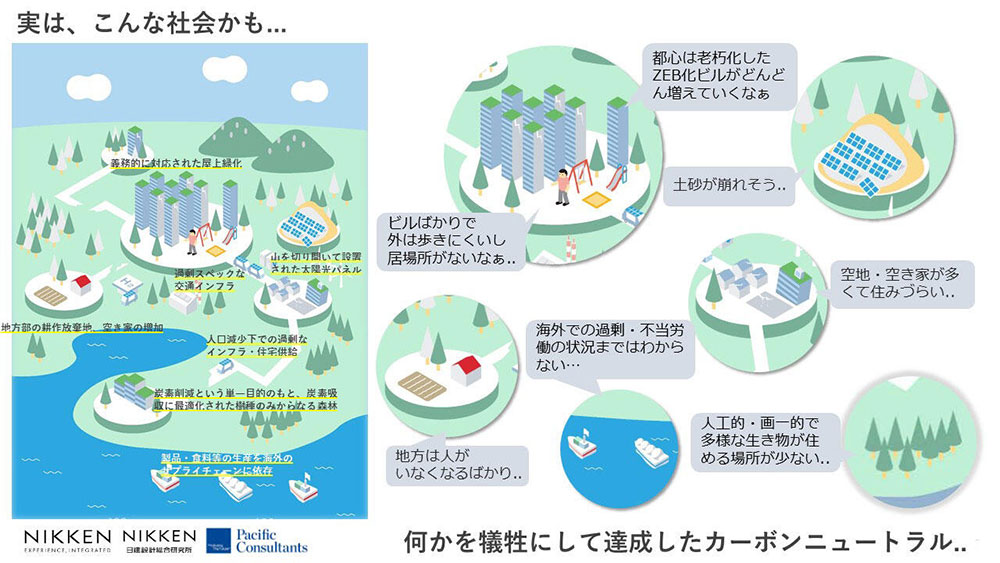
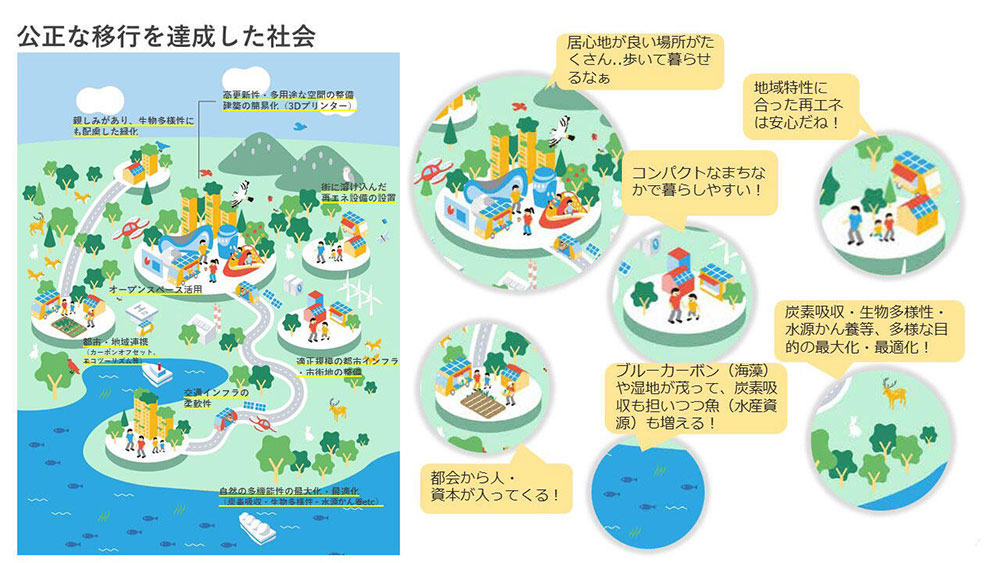
In the working group focused on carbon neutrality (decarbonization), we envision a city that has achieved decarbonization by 2050. However, we worry that simply making decarbonization the goal might not result in a prosperous city, but rather a society built on some kind of sacrifice. From this question, we extracted points of concern and presented an alternative approach that focuses on the process of "just transition."
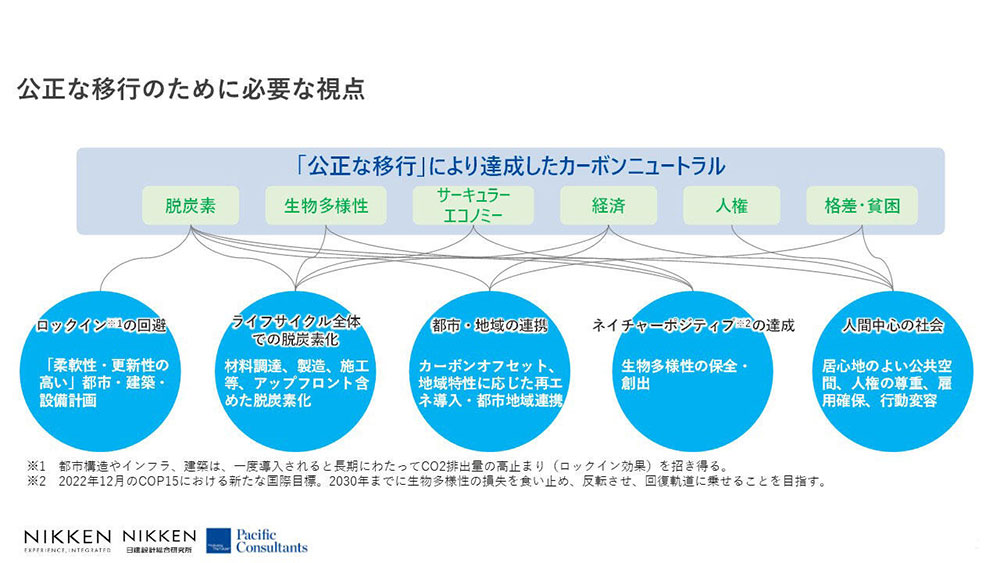
To ensure a just transition, the working group identified 5 keywords: Avoiding urban structures that continue to emit CO₂ (lock-in); decarbonization across the entire construction lifecycle; collaboration between cities and regions on renewable energy adoption; nature-positive initiatives; and a human-centered society. Based on these keywords, the vision for cities in 2050 proposes wood-based buildings, construction technologies using 3D printing, and the development of multifunctional green infrastructure, etc. The working group emphasized a perspective that aims to create human-centered, well-being-focused cities in parallel with achieving decarbonization.
Air mobility: The revival of island nation, Japan - The "exciting" decline of regional areas
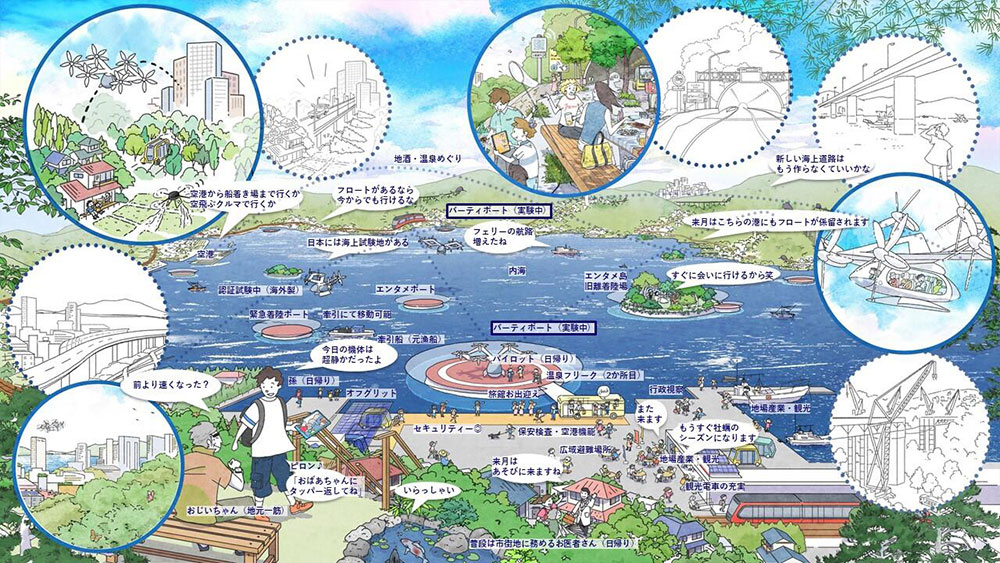
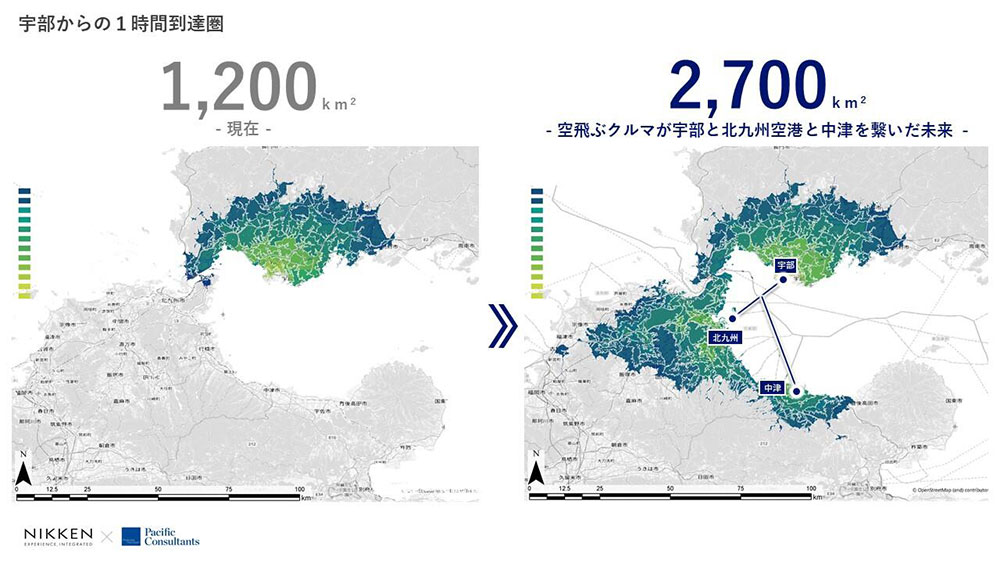
With legal reformation imminent, "air mobility" has been attracting attention in recent years. In this working group, we will envision concrete flying car services in rural areas, starting from the concept and then consider how to create excitement from the decline of Suo-nada Sea surrounded by the Chugoku, Shikoku, and Kyushu regions. For example, we calculated that if three takeoff and landing sites were developed starting from Ube in Yamaguchi Prefecture, the travel range within one hour would expand significantly, demonstrating the effectiveness of this service.
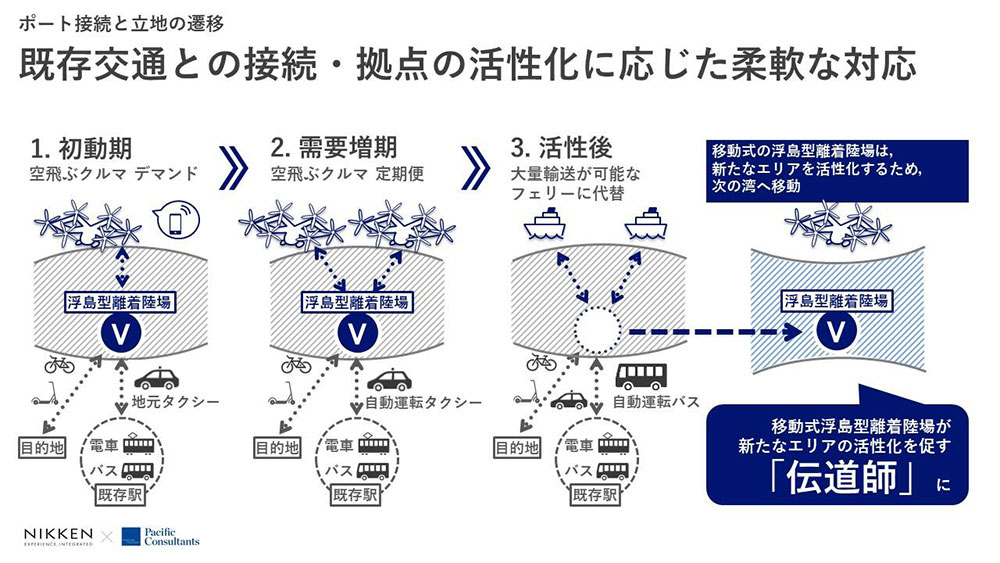
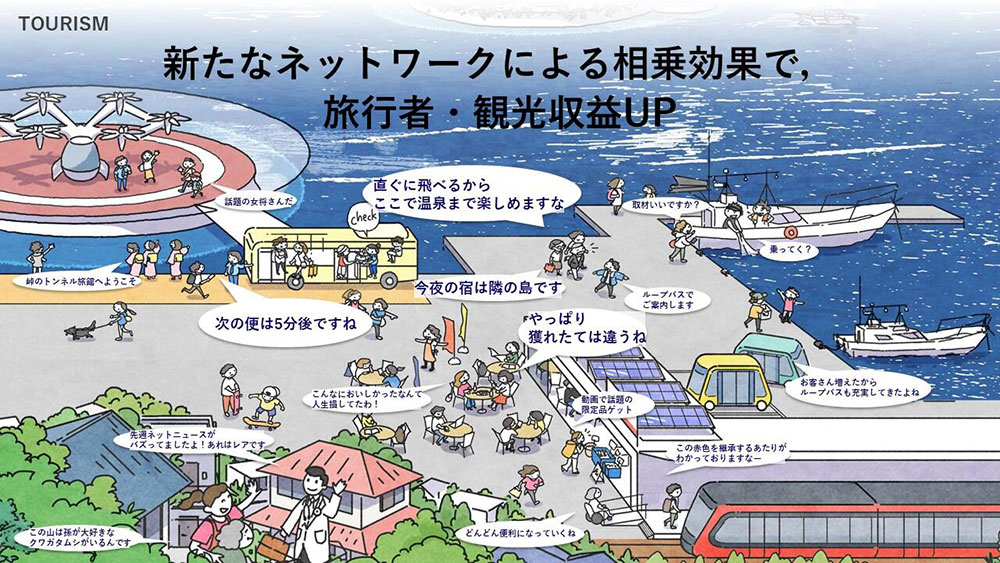
Furthermore, we propose a floating island-type landing and takeoff area that utilizes the sea, where route planning is relatively easier compared to land. This uses the same floating float technology used when constructing piers and other structures. Because it is movable, it can adapt to future changes in needs, and it is a future infrastructure that can keep implementation costs down.
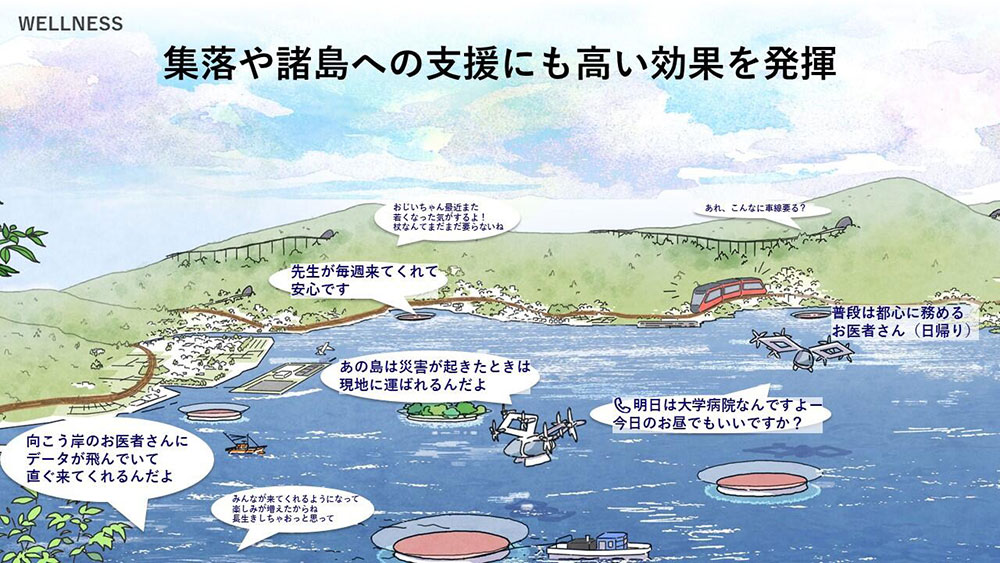
Furthermore, we demonstrated three effects that the social implementation of flying cars would bring to local communities. First, it would revitalize the tourism industry. New tourism opportunities would emerge in areas that were previously inaccessible and therefore unwelcome. Second, it would enable emergency transport, thus contributing to health, medical care, and disaster prevention.
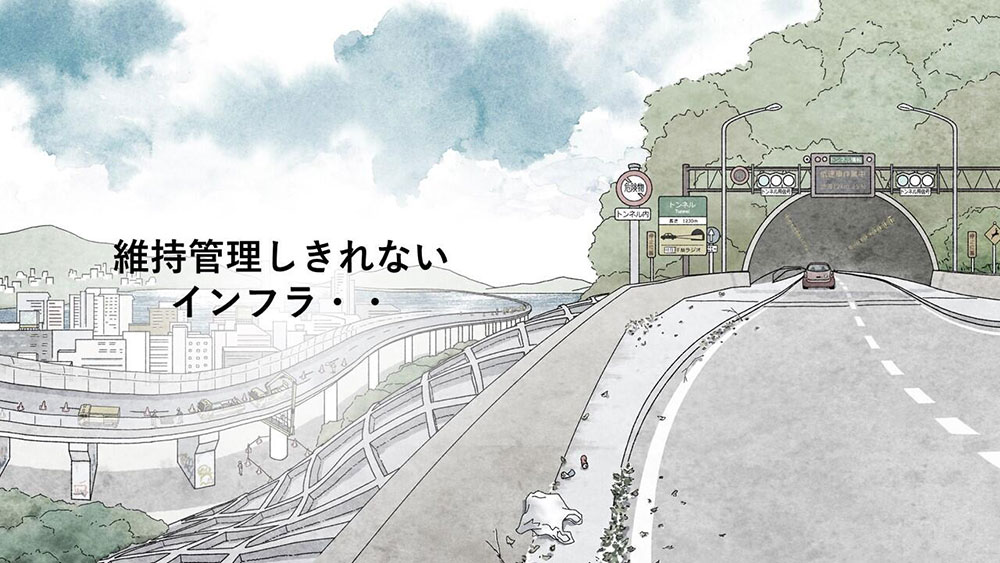
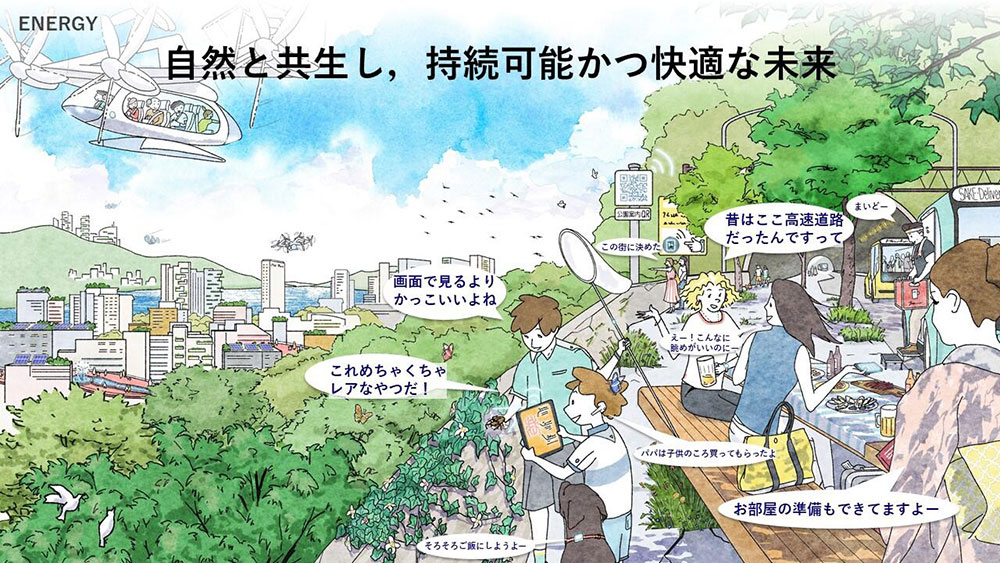
Third, is contributing to sustainable urban development. By implementing air routes of flying cars, we can reduce the enormous construction and maintenance costs associated with excessive tunnels, bridges, and other infrastructure connecting regional cities, and use the funds to restore a world where we can coexist with nature.
Japan has many bays like Suo-nada sea. This proposal may revive the charm of Japan, an island nation that lies dormant in its remote regions, and fill the future of our children and grandchildren with excitement.
A future vision to uncover challenges and technologies that do not yet exist
Based on the ideas of the three working groups, each group is continuing its research while interacting with each other from various perspectives, including the future possibilities brought about by Earth scanning technology, social systems for decarbonization and avoiding lock-in, and the image of attractively shrinking cities. In this process, the possibility of new technological developments, such as the future energy source being light rather than electricity, has also been shared. Pacific Consultants, a civil engineering company, and Nikken Sekkei, an architectural firm, will continue to collaborate and propose better urban development. By crossing industry boundaries, they aim to create a chemical reaction and generate new value.
Co-creation members
| ① Digital | PACIFIC CONSULTANTS: Takashi KITANO, Hiroki YOSHITAKE, Hiroki SHIBUYA, Akira MITSUYASU, Tsukina SEUCHI Nikken Sekkei: Isamu NISHI, Shinpei ITO (NSRI*), Mariko DOI (NSRI) |
|---|---|
| ② Carbon neutral | PACIFIC CONSULTANTS: Naoto NOMURA, Shota SAKAMOTO, Kosuke NAKAGAWA Nikken Sekkei: Ryoichi KUROHA, Satoko ADACHI (NSRI), Ayumi TANIGAWA |
| ③ Air mobility | PACIFIC CONSULTANTS: Keisuke MIZUKAMI, Mifuyu KUROSAKI, Takeshi KONO, Mariko FUJIWARA Nikken Sekkei: Hiroyuki SUGA, Shuichi WATANABE, Asuna SEGAWA, Shujiro IMAEDA (NSRI) |
*NSRI: Nikken Sekkei Research Institute