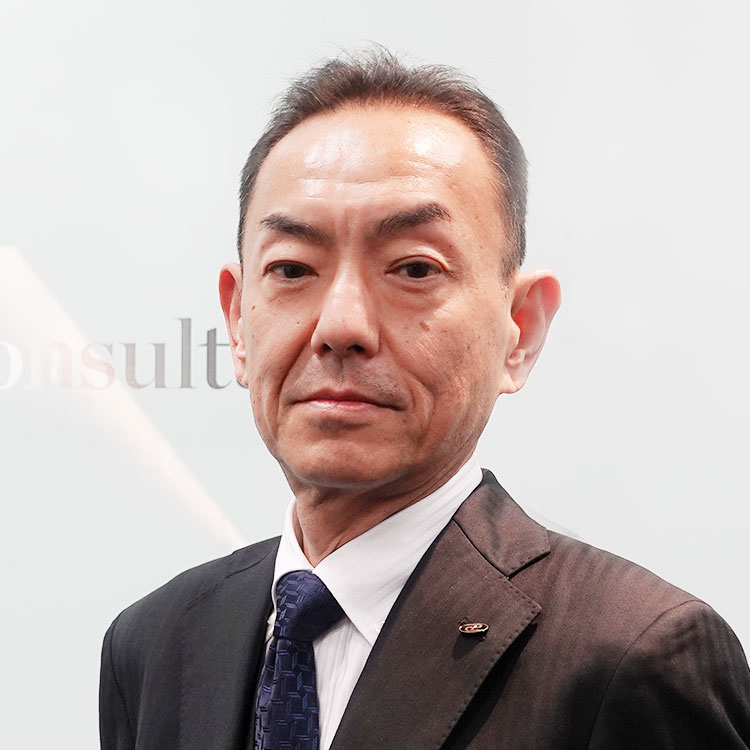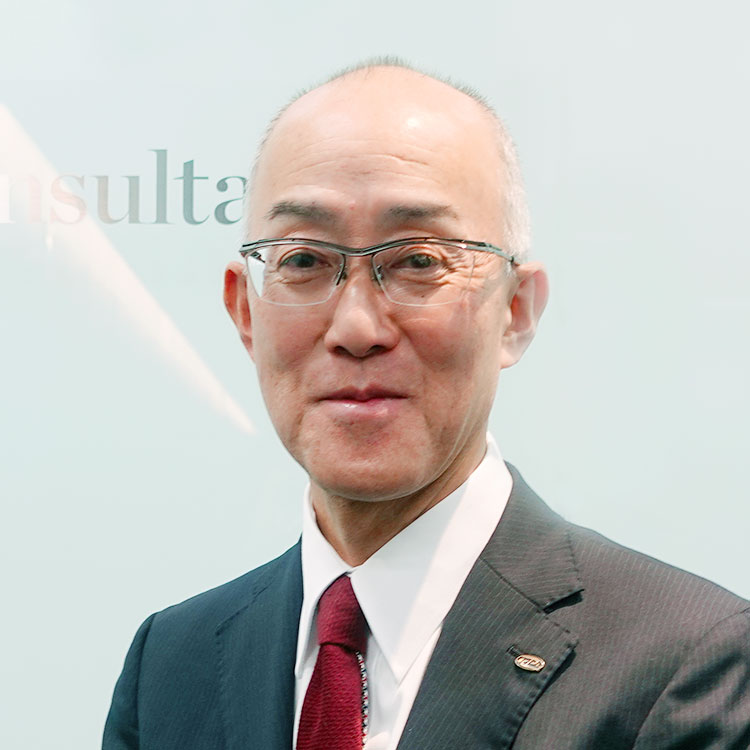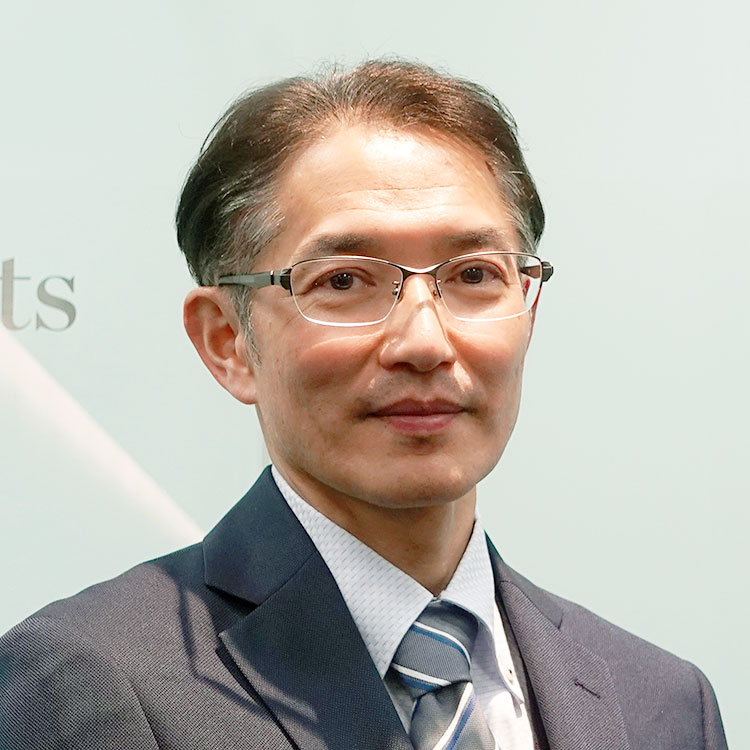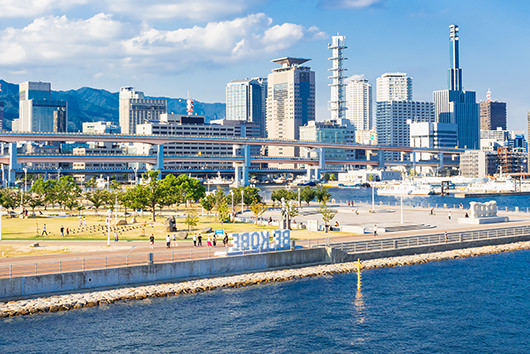

March 2026 marks 15 years since the unprecedented Great East Japan Earthquake. Immediately after the disaster, PACIFIC CONSULTANTS decided to unite the entire company in its support of the affected areas, with support teams rushing to the Tohoku Branch Office from across the country. They carried out a massive scale and number of restoration and reconstruction projects in various locations, sometimes holding face-to-face discussions with local residents. Hiroaki ITO, General Manager of Tohoku Branch Office, Makoto KIMURA, Executive Manager, and Takahiro HORIAI, General Manager of Tohoku Land Infrastructure Dept. discussed how the Tohoku Branch Office led the effort and how it plans to build on its success and contribute to the region in the future.
INDEX
- Many hands were raised saying they wanted to come and support the team
- Taking a major step in supporting clients
- Multiple defenses, the asset of Build Back Better
- Passing on a wealth of know-how and learning to further contribute to the local community
Many hands were raised saying they wanted to come and support the team
--Please tell us about what happened at the time of the disaster.
KIMURA: I was the group leader of the Transportation Policy Group in the Tohoku Branch Office. The scale of the damage was so great that there was only so much my department, let alone the branch, could do. However, then, President Shinichi HASEGAWA declared that the entire company would come together to support the recovery and reconstruction efforts, and engineers rushed to help from all over the country, from Tokyo to Hokkaido to Kyushu. In Tohoku, there were only a few members in charge of regional planning, which is the core of the reconstruction work, so all we could do was continue with our normal work, but we were instructed to get that done first. I became Deputy General Manager of the year after the disaster, and from when I became general manager I began to be involved in reconstruction work as a manager, and in 2018 I began to oversee the entire branch as General Manager.
HORIAI: I was the group leader of the River Group at the time. It was a busy time, right before the end of the fiscal year, so I remember how difficult it was even just to handle regular work. Furthermore, KIMURA, who lived in Sendai at the time and worked at the Tohoku Branch, and I were both disaster victims. We were grateful for the constant stream of relief supplies delivered from Headquarters. Two or three days after the disaster, once the initial confusion subsided, things suddenly became busier. Engineers from all over the country, primarily in the fields of rivers, ports, coasts, and infrastructure, including urban development, rushed to help, and dedicated departments such as the Disaster Recovery Section were established within the Engineering Dept. Our office was large enough to rent out an entire floor, but we weren't divided into vertical sections. I remember feeling reassured by the all-out effort that only PACIFIC CONSULTANTS could muster. In fact, the other day, we had a gathering of General Manager of Department and General Manager of Section from the Land Infrastructure Dept. from all over the country, and many of them had experience working on reconstruction projects at the Tohoku Branch Office. I felt that their experiences at the time had helped them grow.
--ITO, General Manager of Branch, you were working in Tokyo at the time.
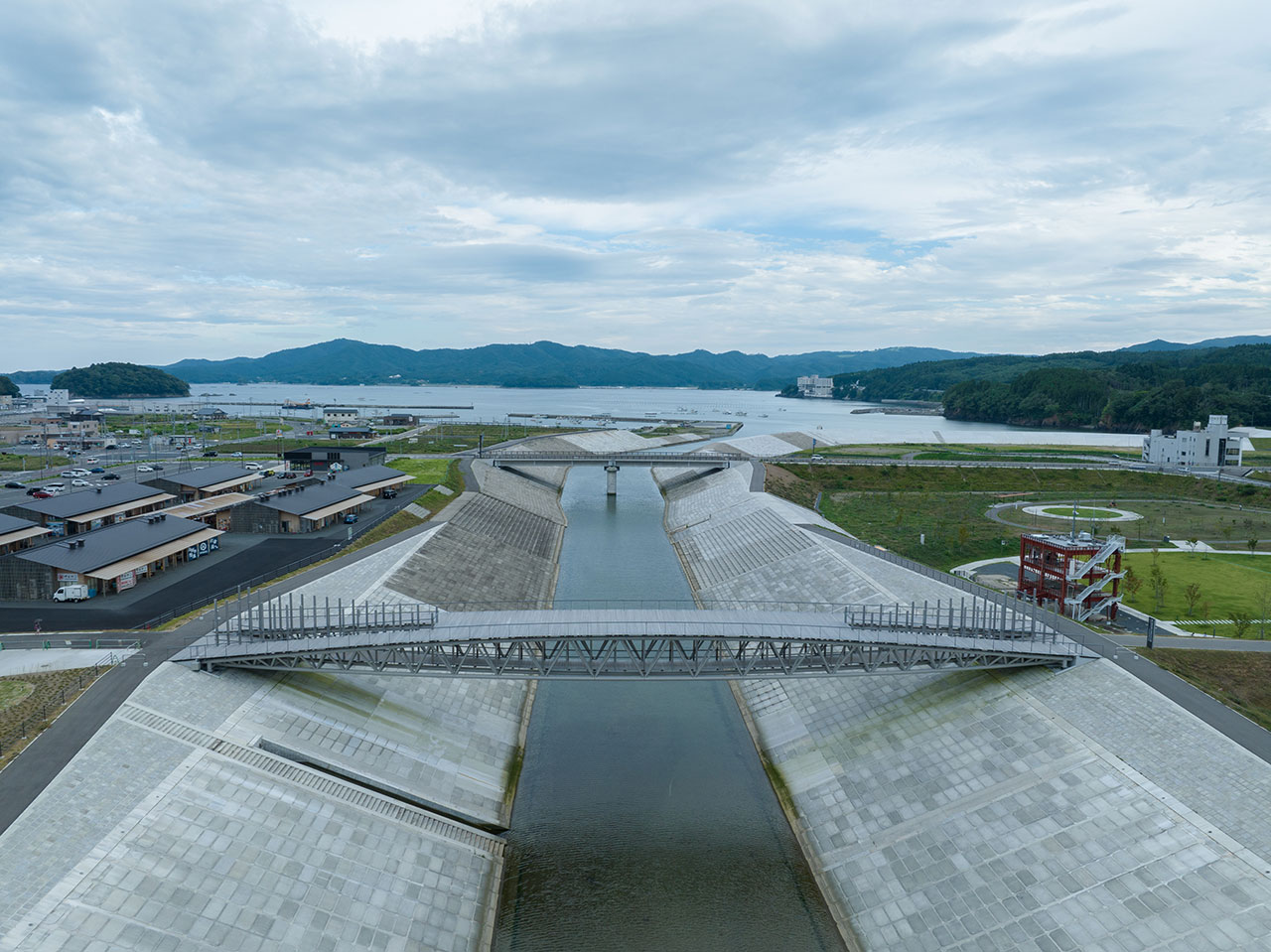
ITO: I was the General Manager of the Urban Renewal Sec., and on the day of the disaster, I was in our office in Shinjuku for a meeting. The management team announced that the entire company would work together on recovery and reconstruction, and many people, including myself, raised their hands to go to the affected areas. Tokyo was shaken by the earthquake, and we also witnessed the tsunami on various video footage, so we all felt a sense of urgency. The shock to those affected in the affected areas was undeniable, but the shock and frustration of those outside of Tohoku who saw the footage was also enormous. However, since it was the end of the fiscal year and normal operations were also difficult, I asked two of my subordinates to go for six months. That ended up lasting for many years, and even now, they still joke about how they were only promised six months. However, by being able to see the reconstruction work through to the end, I believe they were able to grow as engineers. While I myself was not stationed in Tohoku or involved in any specific reconstruction project, I visited the area several times shortly after the earthquake. When I was appointed General Manager of Tohoku Branch Office two years ago, I had the opportunity to visit and see the results of the reconstruction work in Natori City, Minamisanriku Town, Ofunato City, Kesennuma City, and other places, and it really brought home to me how far we have come just how big a role our company has played. Of course, true reconstruction in terms of the lives of the residents will continue for a long time to come, and there are certainly issues that need to be resolved, but I feel that we have fulfilled to some extent the role that we should have played in the 10 to 15 years since the disaster, and I feel anew the significance of our company's existence.
Taking a major step in supporting clients
--The restoration and reconstruction work was on an unprecedented scale, and I imagine it was a different endeavor from conventional social infrastructure development projects. What were your thoughts as you were involved?
KIMURA: Up until now, infrastructure development has been a contracted business, but the clients themselves were greatly weakened by the disaster. Therefore, we were called upon to provide support to the clients themselves. For example, Minamisanriku Town needed to execute a much larger budget than before the earthquake, so we proposed the introduction of a new concept called PMC (Project Management Consulting). To achieve project goals, the client typically handles a high-level program, including basic concept and planning, overall project coordination, and project methodology review, and then specific projects proceed under that program. However, with the client's personnel shortages in both quantity and quality, this type of standard project execution was difficult. To achieve the project's objectives, we felt it was necessary to act on behalf of the client, coordinating the management of the high-level program and the specific projects.
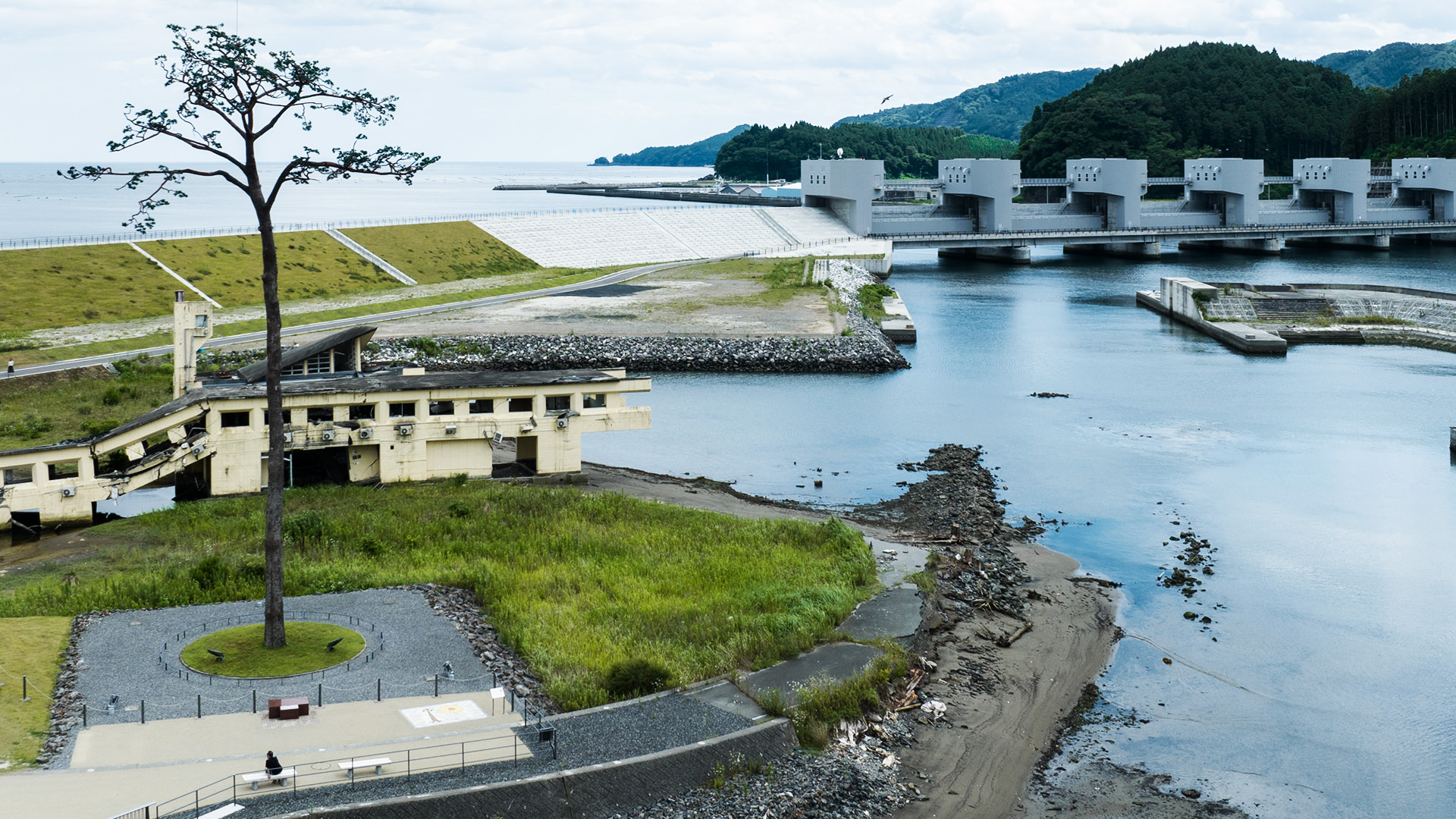
HORIAI: The restoration and reconstruction project for the former Kitakami River estuary, which I was involved in as a CM, was a major undertaking: constructing a new levee nearly 15 km long, integrated with the town. While typical river disaster restoration aims to restore the original state, this restoration and reconstruction project was undertaken in conjunction with the development of a new town. Furthermore, widespread land subsidence had occurred, and without a system for coordinating and coordinating with various related organizations and responding quickly to issues during the project, the progress of the project would have been hindered. More than 10 project entities were working simultaneously, and we served as both project and construction manager, managing the detailed schedules and issues for each project, as well as coordinating with construction companies. We often needed to retroactively adjust the design at the construction site, and we connected the CM site with our nationwide design departments as a back office, allowing us to quickly revise the design.
KIMURA: In normal projects, we play a supporting role in public information sessions and opinion exchange meetings, but in the aftermath of Great East Japan Earthquake, we took the lead on behalf of the government, explaining things and exchanging opinions together. It was difficult, but I think it led to a lot of learning and growth for us.
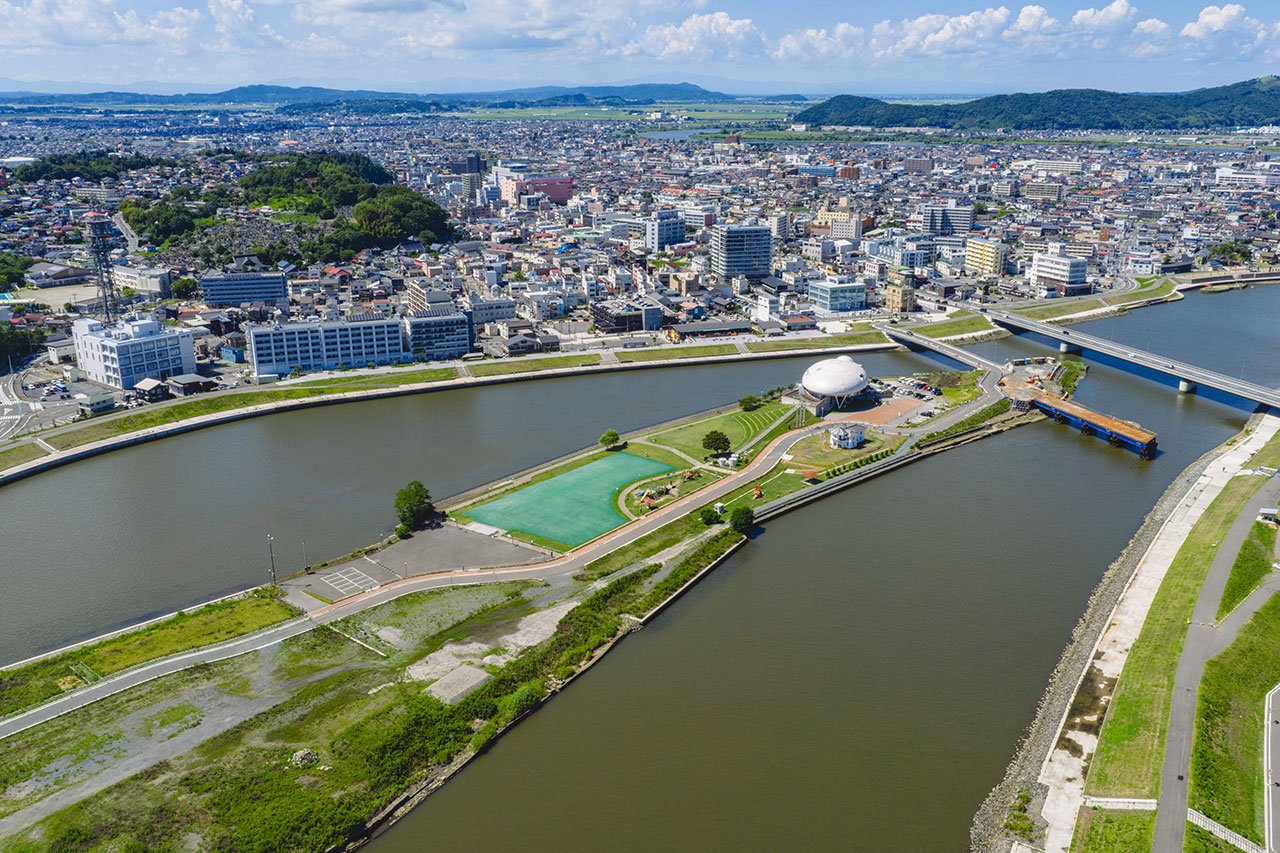
ITO: Whether rebuilding on-site or relocating en masse, it was first necessary to draw up a big picture of where and what kind of town to build. It's rare to start town planning by considering where to build it in the first place. Moreover, each resident has their own thoughts, and I heard that many were reluctant to get involved in the planning. I think the people in charge felt a great sense of relief and emotion when they were able to complete the reconstruction work and open the town.
Multiple defenses, the asset of Build Back Better
--What do you think you have learned from being involved in the reconstruction work?
HORIAI: One of the things we learned from the unimaginable damage caused by the tsunami was the concept of defense in depth. There are limits to how individual facilities can respond to natural disasters up until now, so we need to learn from the wisdom and ingenuity of our predecessors and provide multiple layers of defense in both hard and soft areas to compensate for this. At the United Nations World Conference on Disaster Risk Reduction held in Sendai in 2015, we created a model and AR to demonstrate this concept of defense in depth.
KIMURA: I think the idea of "Build Back Better," rather than simply returning things to the way they were before the damage occurred, is something we came up with as we were actually involved in the reconstruction efforts with the local residents.
ITO: The Tohoku region suffered great damage in the Great East Japan Earthquake, but reconstruction work is almost complete except for the area around the nuclear power plant in Fukushima Prefecture. However, it is also a region in Japan that is at the forefront of issues. The population is declining and aging at a rapid pace, and global warming has changed the way rain falls and the routes of typhoons, causing unprecedented flood damage almost every year.
HORIAI: Speaking as someone involved in river management, Hokkaido and Tohoku are vulnerable to heavy rain. If we were to experience the kind of heavy rainfall that Western Japan has experienced in the past, it would be devastating. The concept of river basin flood control, which treats the entire basin, from the catchment area to the river basin and floodplain area, as a single basin and involves various stakeholders working together to prevent flooding, was born out of the experience of recovery and reconstruction following the Great East Japan Earthquake and the damage caused by the East Japan Typhoon 2019. These river basin flood control measures must be tackled as pre-disaster prevention measures in conjunction with urban development. Following Great East Japan Earthquake, we were able to take bold measures, such as promoting urban development from scratch, precisely because it occurred after the disaster, and we had no choice but to do so. However, the challenge ahead is how to advance disaster-resilient urban development as pre-disaster prevention measures in a way that satisfies both the government and residents, and I believe we are being asked to come up with proposals. Our company is currently examining the investment effectiveness of pre-disaster prevention urban development, and it is necessary to concretely demonstrate its effectiveness.
Passing on a wealth of know-how and learning to further contribute to the local community
--What kind of initiatives will the Tohoku Branch be pursuing from now on?
ITO: Last year, the Tohoku Branch Office celebrated its 60th anniversary. Celebrating 60 years since the branch opened means that we have been needed by the local people in some way. We would like to carry on our business with pride. We must also pass on the experience and knowledge we have gained from 15 years of recovery and reconstruction work since the Great East Japan Earthquake, as well as the many lessons we have learned as a branch in the disaster-stricken area. We also want to value our support for World BOSAI Forum, which is held periodically in Sendai, and our collaboration with academic and association organizations, such as by seconding staff to International Research Institute of Disaster Science, Tohoku University.
HORIAI: We need to properly evaluate what we have done over the past 15 years and what the results have been. This will lead to what comes next. We need to look not only at the results, but also at what issues remain. I intend to do my best to accomplish this as the task that remains for me.
ITO: There are challenges in terms of passing on the restoration and reconstruction work. Some of the employees who were in charge of the work are approaching retirement age, but there are lessons and know-how that can only be passed on from person to person. For example, reading the minutes of meetings with residents does not convey the full extent of how discussions were held. However, Mr. KIMURA, Mr. HORIAI, and all the other experienced employees have a strong sense of mission to pass on their knowledge to the next generation. I believe that a major role of mine is to ensure that this knowledge is put into practice.