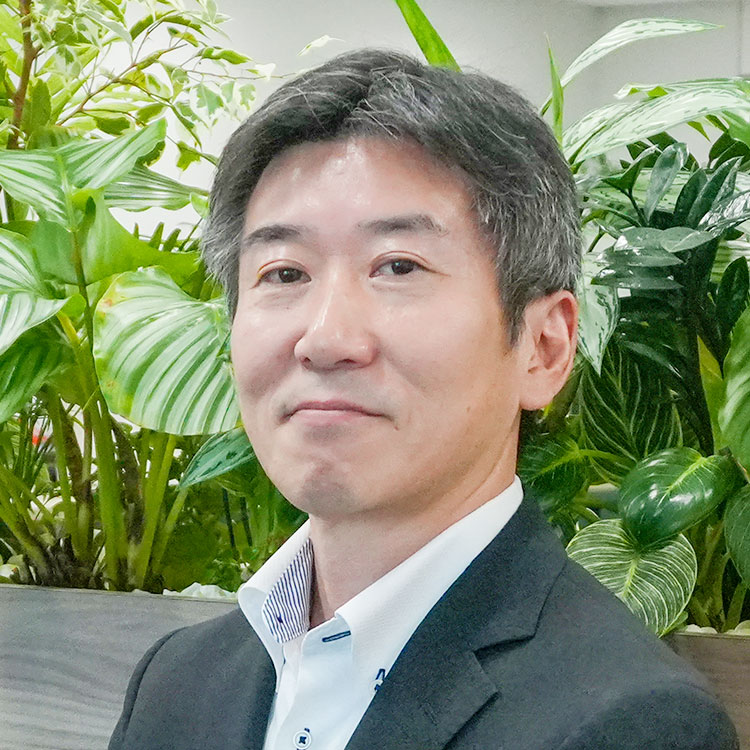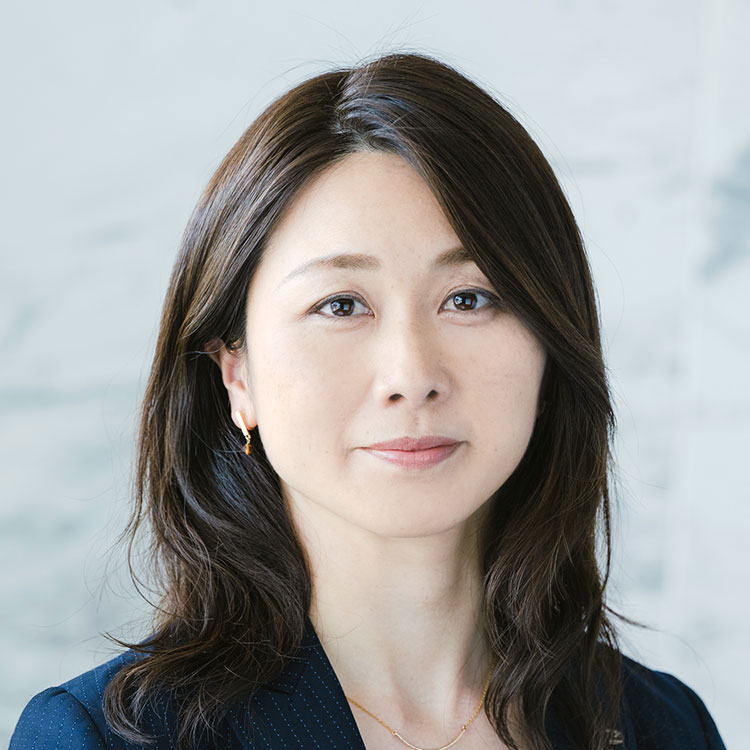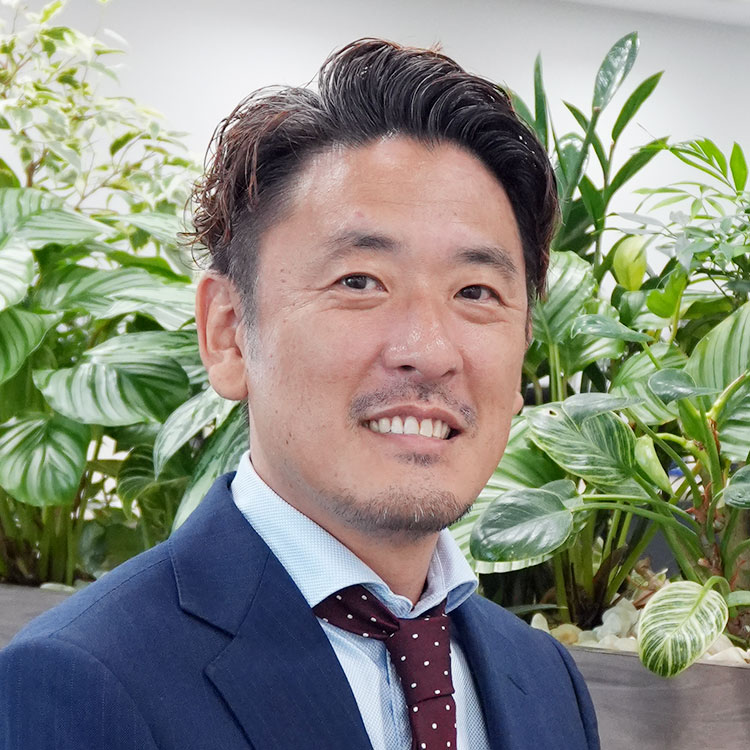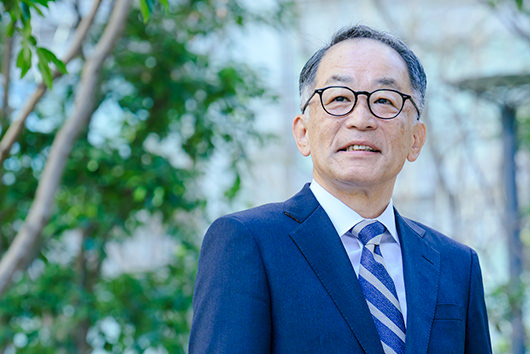


PACIFIC CONSULTANTS GROUP has set "Diverse Talent and Success" as one of the basic policies of its ongoing Medium-Term Management Plan 2028, and has clearly stated that DE&I will be a strong driving force for the group's growth. We talked to three people who are promoting DE&I initiatives: Fumiaki SHINKAI, the Corporate Services Dept., PACIFIC CONSULTANTS HOLDINGS/General Manager of General Affairs Dept., PACIFIC CONSULTANTS; Akiko ISHIZAKI, General Manager of Human Resources Strategy Sec., Human Resources Strategy Dept.,PACIFIC CONSULTANTS/Human Resources Strategy Dept., PACIFIC CONSULTANTS HOLDINGS; and Masayuki HACHIUMA, General Manager of Water Supply & Sewage Dept.,Land Infrastructure Div., PACIFIC CONSULTANTS.
INDEX
- We will promote penetration through four stages
- Let's create a "culture of raising your hand"
- The value of diversity experienced on-site
- Changes begin with questioning your own "normal" assumptions
- What kind of group image does DE&I envision going forward?
We will promote penetration through four stages
ーCould you tell us about DE&I's past initiatives?
ISHIZAKI: Our first major initiative was the "888 (Triple Eight) Project," which started in 2010. With the idea of "8 hours for work, 8 hours for yourself and your family, and 8 hours for your health" in mind, we aimed to reform long working hours and achieve work-life balance. From around 2015, under the basic principle of D&I, we also delved into fostering organizational atmosphere and culture. After that, with the rapid spread of telework in the wake of the COVID-19 pandemic, and the ability to work in a way that takes into account the individual circumstances of each employee, I think our efforts shifted from caring for minority individuals who have difficulties with their work styles to providing fair opportunities for diverse talent to thrive, and then to a management strategy that aims to transform diversity into corporate value.
SHINKAI: That restart was the "DE&I" declaration in 2023 after the COVID-19 pandemic. We included "Equity" because we recognized that simply having diverse people doesn't lead to organizational growth; diversity only leads to growth when everyone is fairly provided with opportunities to utilize their individuality and characteristics and thrive. That was carried over into Medium-Term Management Plan 2028.

Pacific Consultants DE&I Declaration
PACIFIC CONSULTANTS has its roots in "Pacific Consultants. Inc.", which was established in 1951 by Japanese and American engineers to contribute to the reconstruction of Japan, and has developed by leveraging the diversity and comprehensive strength of its technical fields. In order to realize our group vision of "Producing the Future," it is important to respect the different knowledge, experience, values, and individuality of each employee, and to create new value by maximizing and integrating the power of individuals and teams.
Through the new value and innovation created by our diverse talent, we will contribute to the realization of our group vision and ultimately to the sustainable development of society as a whole.
ISHIZAKI: In Medium-Term Management Plan 2028, we have positioned "Diverse Talent and Success" as one of our three basic policies. This clearly demonstrates that management has committed to promoting DE&I as one of the pillars of our growth strategy, and I think it can be said to be a major turning point. While we have listed the percentage of female managers and the number of foreign national employees as KPIs, these are merely indicators that capture only one aspect of our goal. What we are truly aiming for is to create an organization that leverages diversity, where diverse members with different ideas, wisdom, and perspectives can respect each other, compete with one another, and create new value.
SHINKAI: I believe that promoting DE&I involves four steps: "understanding the essence of DE&I," "providing equal opportunities," "creating a psychologically safe workplace," and "creating new value through the integration of knowledge and experience." We are proceeding step by step, taking into account the situation of each business unit. Our goal is to have all four of these achieved across the entire group in three years.
Let's create a "culture of raising your hand"
—What specific measures are you considering?
ISHIZAKI: In order to leverage diversity, we need to have a psychologically safe organization. I believe that the 1on1 meetings we are currently working on are important. Not only will we continue them, but as an evolution of them, we have also started "cross1on1," where employees have 1on1 meetings with people from different organizations or senior employees in order to learn about diverse values, careers, and experiences. We also want to further spread a "culture of raising your hand" for autonomous career development.
—What is the "culture of raising your hand"?
ISHIZAKI: For example, there's the "open application program" that we started this term. It's a program that allows employees who volunteer to take on new roles to gain experience in different departments and fields, for purposes such as training. For example, to become a "design engineer who understands the field" or to aim to become a "PM (Project Management) Professional" in the future, design personnel can be temporarily transferred to the CM (Construction Management) or construction management field to gain experience in the actual construction phase, which can serve as a catalyst for their growth. In addition, we have also revised the career plan sheets that our employees create. Previously, these were short-term plans of two or three years, but we have changed them to long-term plans. We hope that each individual will reflect on their career from a long-term perspective, discuss with their seniors and superiors what kind of growth they want to achieve in the future, and what kind of experience they want to gain to achieve that, and use it as a communication tool for that purpose. We also expect managers to take on the roles of career support and diversity management. In the personnel system revisions we are currently working on, we have added DE&I (Diversity, Equity, and Inclusion) to the evaluation items for management. We want to cultivate people with diverse personalities and characteristics through the efforts of both superiors and subordinates.
—I imagine some employees find it difficult to come up with long-term career plans on their own.
ISHIZAKI: Of course, I think there are people like that. First and foremost, superiors should support career development in1on1 meetings and so on, but in addition, we have also opened a career counseling service (named "Carippo") which we encourage our employees to use. "Carippo" is a system that allows employees to consult with external professional career consultants. At our company, we call this future autonomous career development "jungle gym-type career development." This means that instead of climbing a single ladder straight up, we want it to be something where employees think for themselves about how they want to climb, and aim for the top by moving sideways and diagonally as well. Of course, it is a fundamental premise that the direction of individual growth and the direction of organizational growth will overlap, so in that sense, we believe that the role of management is important.
SHINKAI: There are always people who don't know how to think about their careers right now. If we can understand what those people are thinking and what their strengths are, and then combine that with the good points of others, those people can move up a notch, and the organization as a whole can move up two or even three notches. I think the efforts of management are important in creating diversity and turning it into a force for growth.
The value of diversity experienced on-site
—How is the value of diversity perceived in the field of technology?
HACHIUMA: We now have many employees who joined us mid-career, and I feel that their work styles are very different. Personally, I think that many people who have grown up at PACIFIC CONSULTANTS are the type who take on everything themselves, thoroughly investigate and find the answers, and use that as fuel for their growth. However, when I observe how people who have come from outside work, I see that some of them delegate tasks to capable people and skillfully bring them together to achieve great results. I feel that this is one of the things we should learn. I'm realizing anew the value of diversity not only in terms of technological diversity, but also in terms of project management and communication styles.
SHINKAI: We're currently discussing DE&I in various departments., and with the increase in female employees and mid-career hired employees, I think many people are beginning to realize the value of diversity. When I talked to a manager in Marketing & Sales Dept., he//she mentioned that they had arranged for someone with sales experience in the private sector to give a presentation, and it was very persuasive and appealing. They said that there isn't just one way to do things, and that's the value of DE&I.
ISHIZAKI: Looking at major projects like Shibuya, which could be considered our flagship project, it's not just that the technical fields of the people involved were diverse, but also that the diversity in various aspects—people who think about the future of Shibuya from scratch, people who negotiate persistently among many stakeholders, people who interpret complex conditions and create meticulous design documents, and so on—is what makes these projects strong.
Changes begin with questioning your own "normal" assumptions
—From October 2026, the group will launch a new international operating company Pacific Padeco International, and will undergo a major reorganization of its group structure. What kind of changes do you hope to bring about?
SHINKAI: There's a term called "group subsidiary," and that might be true if you're defining the capital relationship, but I think a holding company is a mechanism where the different values of the companies that make up the group are mutually respected and shared. How can we achieve inclusion and create new value? As we take on many private businesses in addition to our international business, I think the social role of PACIFIC CONSULTANTS GROUP will become increasingly important. For that reason, promoting DE&I is crucial.
ISHIZAKI: What we need to be careful about is that PACIFIC CONSULTANTS is the core operating company within the group and is also the largest in scale, so we tend to fall into the trap of thinking that PACIFIC CONSULTANTS' organization, culture, and methods are the standard. If we do that, we won't be able to showcase diversity.
HACHIUMA: It's true that we have a sense that our style is the "basic" way. But if we just say, "This is the way it is, so do it this way," nothing will change.
ISHIZAKI: As HACHIUMA said, it's not that PACIFIC CONSULTANTS has the right answer and we expect them to follow it. What's considered "normal" differs from company to company. The decision-making process, the speed, and the way of working are all different, and there's no single right answer. Instead of drawing a line because they're different from us, I believe that if we respect each other, accept our differences, and sometimes enjoy the process, and continue to discuss towards our goals, we can surely provide even better services.
What kind of group image does DE&I envision going forward?
—What kind of future do you envision for Pacific Consultants Group as it continues to promote DE&I?
HACHIUMA: Our vision is to "Producing the Future." We need to be a group that can grasp market changes, anticipate future challenges that are not yet visible, and respond to them. We need to create an organization where people of all ages and with diverse experiences can actively speak up, while ensuring a strong sense of psychological safety. The technical knowledge and sensibilities of veterans are also very important; there are universal things that cannot be done without them, regardless of whether they are new or old, so we must firmly pass them on as a foundation. With that shared understanding, we want to become a group that grows significantly while respecting diversity.
SHINKAI: Through promoting DE&I, I believe that in three or five years, it will become commonplace for the individuality of diverse people to be utilized, leading to the creation of unique initiatives. We want to become a company where the individual strengths of people are at the forefront of various businesses and services, and through that, the entire group will take a step up, which in turn will encourage individual growth and create a positive spiral that further enhances the PACIFIC CONSULTANTS GROUP's potential. We want to become a company that people can rely on, knowing that unique solutions will keep coming one after another.
ISHIZAKI: I want our group to be able to take root and thrive anywhere in the world. I believe that being an organization that embodies DE&I means being able to communicate effectively with people in various regions around the world, and even create new value together with those people. There may be barriers to entry in technology, but for a diverse corporate group, the barriers to entry in terms of culture and language should be low, so if there is a region in need, I want us to be an organization that can go there immediately and thrive for that region. PACIFIC CONSULTANTS has been participating in a working group since 2024 to consider the future of Next Generation Spaceport (NSP: New Space Port), right? I think one of the good things about PACIFIC CONSULTANTS GROUP is that we look beyond the ground all over the world, and even into space, and are willing to jump in and say, "That's interesting. Let's try it."
HACHIUMA: I've asked the members participating in the working group to "just take me to the moon for now" (laughs).
ISHIZAKI: No one currently thinks of spaceports as the work of construction consultants. However, we want to grow into a group with broad vision and comprehensive capabilities that can even propose the next social structure. There are people who are pursuing their dreams in space, and we enjoy that challenge together. That is what makes a diverse organization unique, and it may be the source of our growth.
ーWe hope to make DE&I a major driving force for the growth of PACIFIC CONSULTANTS GROUP. Thank you very much.