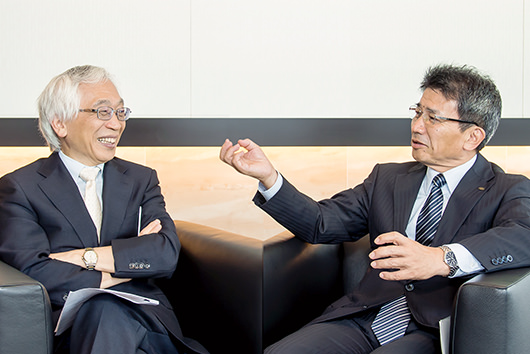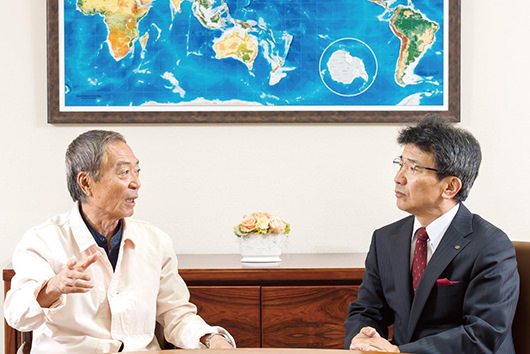

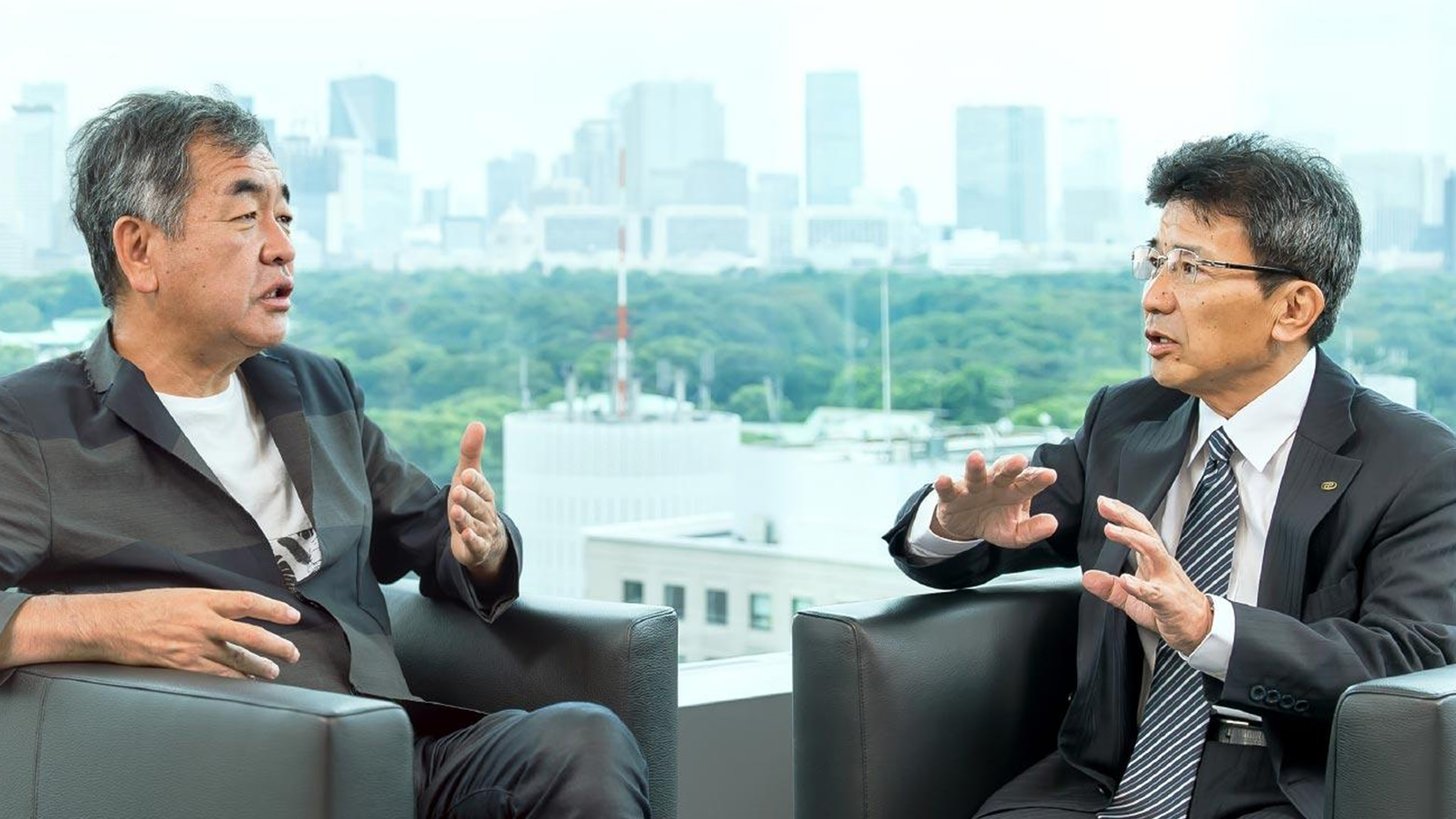
PACIFIC CONSULTANTS, which produces transformations in social services through urban development, and architect Kengo KUMA have collaborated on numerous occasions. This event will explore the roles that society now expects of both architects and construction consultants, and what kind of attractive cities can be created through teamwork between the two.
INDEX
- To enhance our ability to communicate with local communities for urban development
- The meaning of "losing architecture" embedded in the new National Stadium
- A mixed team of domestic and international members proposes ways to bring out new charms of the town
To enhance our ability to communicate with local communities for urban development
TAKAKI: Our company was originally founded by engineers who wanted to contribute to society with their technology in order to rebuild a country devastated by World War II. At the heart of it all were the SHIRAISHI brothers, nephews of then-Prime Minister Shigeru YOSHIDA. Through their conversations with Prime Minister, YOSHIDA and MacArthur, they realized the need for a consulting engineering system by private engineers and worked tirelessly to establish Professional Engineer (PE) system in Japan.
Founded in 1951 as U.S. Corporation, the first President was architect Antonin Raymond, who had been an assistant to Frank Lloyd Wright. Three years later, it became a Japanese corporation. This year marks our 65th anniversary, and throughout this time, the company has consistently been involved in the survey and design of urban infrastructure that supports Japan's reconstruction and growth.
KUMA: Oh, so Raymond was involved in the foundation of the company?
TAKAKI: That's right. Up until now, we've mostly worked in the public works sector, taking a behind-the-scenes role as construction consultants on the government side. We mainly interacted with government officials. Our relationship with architects was also completely divided, and I think we had little involvement. However, with the changing times, I believe that we construction consultants must delve deeper into how to provide social services. I think the relationship between construction consultants and architects will also change as we work to provide total services in local communities.
KUMA: Japanese construction consulting firms are highly regarded both domestically and internationally for their technical capabilities and coordination skills. However, it's also true that local residents often don't fully understand how their town will change as a result of the involvement of construction consultants. We architects, and everyone involved in urban development, need to improve our ability to communicate with local communities.
TAKAKI: That's something we feel very strongly about as well. Since immediately after the 3/11 earthquake, our company has been involved in the overall coordination of reconstruction and town development in Minamisanriku Town, Miyagi Prefecture, in the form of support from the local government. What we value most here is proceeding with the project while engaging in direct dialogue with the residents.
KUMA: Reconstruction isn't simply about returning a town to its original state, but about presenting a new community and a new vision for the town. Therefore, the ability of construction consultants to mediate between the administration and the residents is extremely important. Watching PACIFIC CONSULTANTS' work in Minamisanriku, I thought, "Ah, this could become one of the models for consultants of the future."
I want to use the experience I've gained in civil engineering and urban development on a global scale. — TAKAKI
TAKAKI: Up until now, construction consultants have mostly been contracted by the government, and have tended to prioritize fairness and efficiency. While that is certainly our area of expertise, we are now entering an era where cities will compete with each other in terms of their appeal, both domestically and internationally. Japan is also said to be entering an era of 30 million inbound tourists, and I believe that in urban development, it is necessary to integrate the sensibilities of architects in terms of how to bring out and express the appeal of a city.
I'm amazed by the breadth of Mr. KUMA's work, which extends beyond architecture to include railway car design.
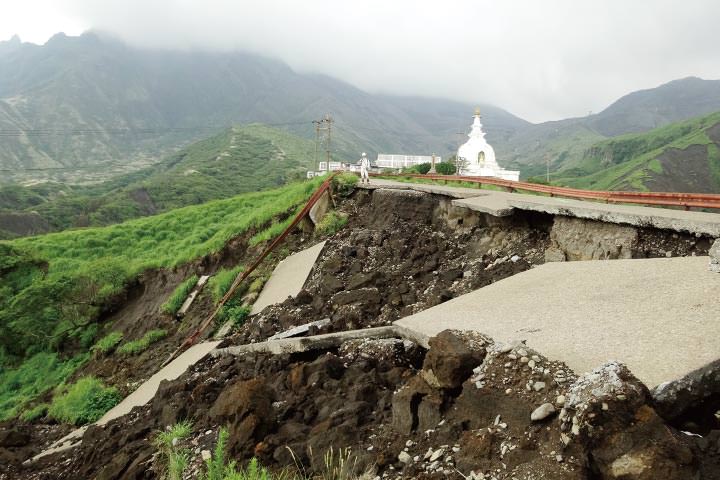
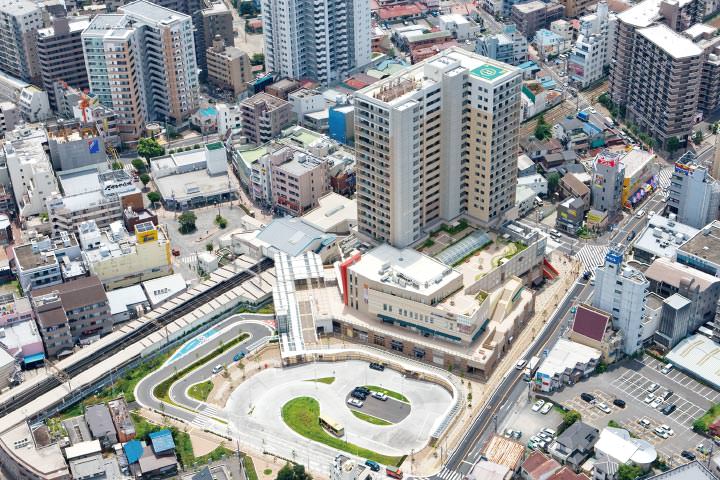
KUMA: Architects should not simply be artists who design buildings, but should be able to delve deeper into society, engage in dialogue with residents, and redesign the social system itself. Buildings are only a part of the social system, and sometimes the option of not building a building at all is also valid. I believe we need to redefine the role of architects in this way.
Many people think an architect's job begins with drawing blueprints, but in reality, before drawing the lines, one must consider various layers, such as the cultural and historical background of the location and how the building will improve the convenience of people and the functionality of the city. To make a comprehensive judgment based on these factors, teamwork involving construction consultants, engineers, government officials, and citizens is essential, rather than relying solely on the architect's expertise. It is important to deliberately break down the siloed structure of the profession by exchanging and stimulating each other's knowledge. Of course, when working overseas, the opinion of a construction consultant familiar with the local area is indispensable.
In other words, the roles of architects and construction consultants are changing. For excellent urban development, it is essential that these two groups work together as a team and leverage their combined strengths.
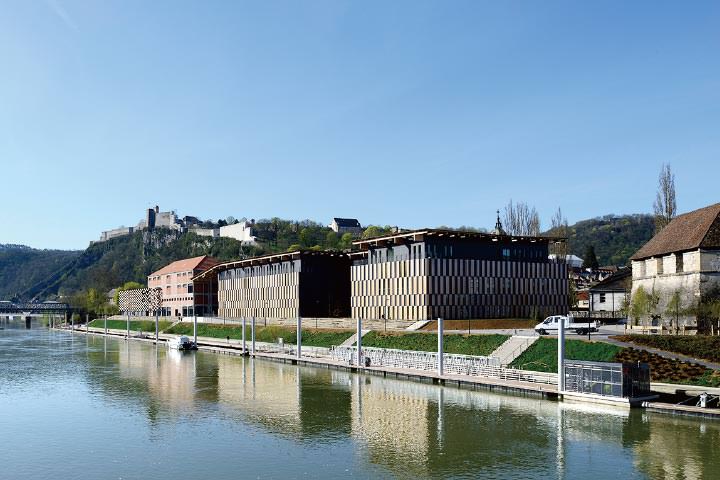
TAKAKI: Mr. KUMA and our company have worked together on the design of a pedestrian bridge in Minamisanriku, and we also worked together overseas on the Tamsui Bridge competition in Taiwan. The project involved constructing a 920-meter-long bridge at the mouth of the Tamsui River, which flows through the suburbs of Taipei, the capital city. Unfortunately, we lost the competition to Zaha Hadid Architects... We also have plans to work together on other projects, such as a super luxury resort development project in Ubud, Bali, and an urban development project near Delhi, India.
I believe we will have opportunities to work together on various projects both domestically and internationally in the future. I hope we can combine the wisdom and experience of architects and construction consultants to contribute to creating attractive cities.
The meaning of "losing architecture" embedded in the new National Stadium
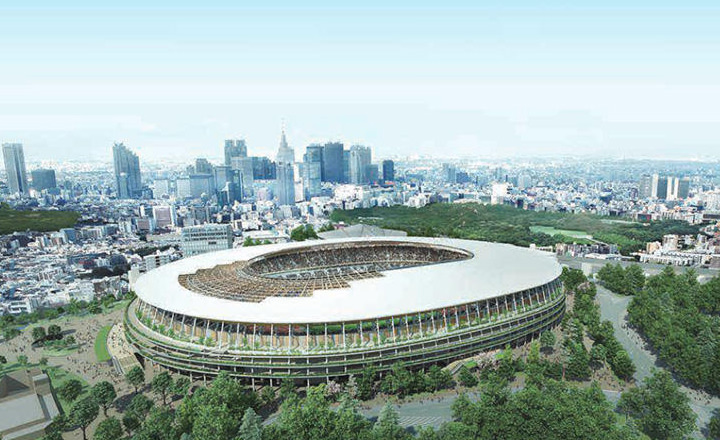
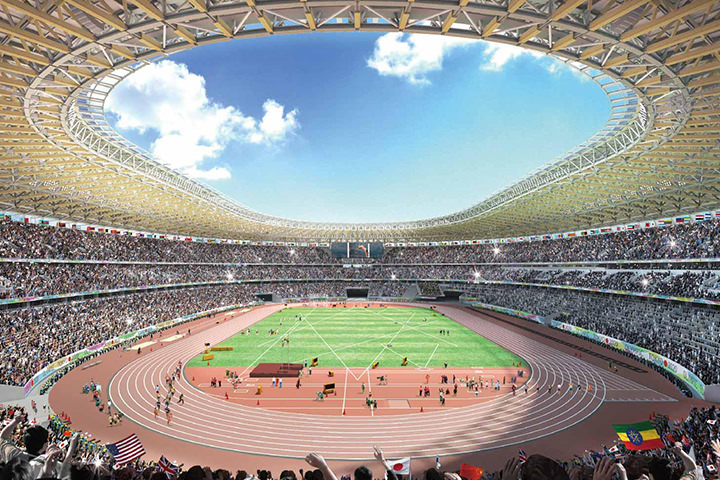
◎Created by Taisei Corporation, Azusa Sekkei, Kengo Kuma & Associates JV/Provided by JSC
Architecture needs to "adapt" well to the local climate and environment. — KUMA
TAKAKI: By the way, Mr. KUMA is currently working on the design of the new National Stadium. Looking at the design plan, it incorporates elements such as a design that blends into the Jingu forest and the extensive use of wood. This is the design philosophy of "losing architecture" that Mr. KUMA often talks about.
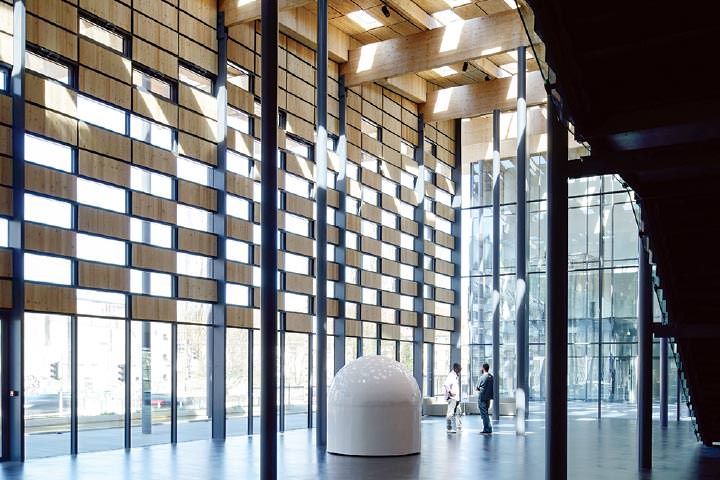
KUMA: Rather than trying to make architecture stronger, I wonder if we can incorporate the inherent weaknesses and gentleness of things into architecture. That's what I mean by "losing architecture." When I was designing the New National Stadium, I felt as if the forest of Meiji Jingu Gaien was telling me, "Make the building lower." 20th-century architecture had a fixed idea that buildings should be strong and tall, made of concrete, and this sometimes clashed with the environment and the local area. However, architecture from now on must be integrated with the local area and the environment.
Using wood is not only environmentally friendly in the sense of CO2 sequestration, but it also results in buildings that fit within a human scale, and even in crowded places, the presence of wood somehow makes them feel more harmonious. Advances in fire-resistant and rot-resistant technologies have overcome the drawbacks of wooden construction. Recently, even in Europe, mid-rise wooden apartment buildings have begun to be constructed, but when it comes to wood technology, Japan still has an advantage. I hope that the new National Stadium can demonstrate that wood can become an important material in future urban design.
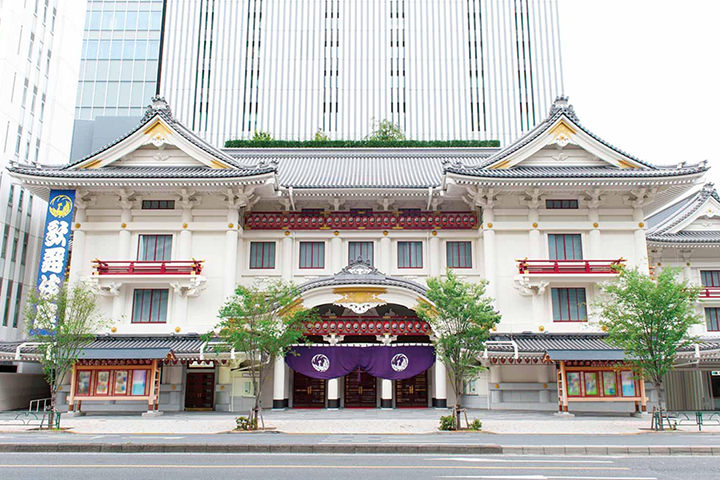
◎In cooperation with: Shochiku Co., Ltd. and Kabuki-za Co., Ltd.
TAKAKI: Japanese architectural and civil engineering technologies have accumulated a wealth of knowledge through the post-war reconstruction period, the high-growth period, and the collapse of the bubble economy. One example of this is the know-how for improving the efficiency of underground structures and cities, given the large number of people moving around in limited land. I recently visited Jakarta and Manila, and the rapid population growth is serious, causing urban transportation to collapse. Developing underground spaces is absolutely necessary. Now is precisely the time to put Japan's expertise to good use.
KUMA: In Japan, there is an architectural philosophy that inherently involves adapting buildings to their environment. People around the world are beginning to understand that Japanese architecture and urban planning can serve as a valuable reference for supporting population growth. I believe this experience, cultivated over a millennium, will give us an advantage in urban design around the world going forward.
A mixed team of domestic and international members proposes ways to bring out new charms of the town
TAKAKI: Our company plans to strengthen its international business going forward, but what are your thoughts on the need for personnel who can compete overseas?
KUMA: I teach at a university, and I try to create as many opportunities as possible for students to work with international students. Through collaborative work, their international sensibilities are automatically honed, and the level of Japanese students has also risen. International students also feel that coming to Japan is meaningful because they believe that Japanese technology can be utilized in this era of environmental challenges. In fact, international students are more eager to participate in projects in disaster-stricken areas such as Minamisanriku.
My firm also actively recruits international talent year-round. This is because creating a mixed team of domestic and international talent allows us to inject new perspectives into our design work.
TAKAKI: How do we find new value within diversity? At our company, we are promoting diversity in our workforce, including foreign employees, based on the concept of "diversity and inclusion." Until now, consultants could work behind the scenes for the government, only interacting with government officials. However, going forward, in order to provide services to society, interaction with a wider variety of people is essential. We must be able to propose new value by clashing with various sensibilities. That is why we are promoting diversity and inclusion at our company.
KUMA: The aspect of proposing new value is what has been lacking in Japanese education until now. Until now, civil engineering and architecture students thought they would get good grades if they finished the drawings neatly. However, from now on, it will be important how they explain their proposals and how they persuade others. People are finally beginning to understand that the foundation of engineering is not drawings, but human skills.
Until 2020, the world's attention will be focused on Japanese cities. We must use the entire city as a stage, producing various events and showcasing Japan to the world. This is truly a test of Japan's ability to propose ideas. Therefore, as service providers, we want consultants to be at the heart of people's communication, guiding dialogue and forming the core of that network.
TAKAKI: That's absolutely right. When our work shifts from individual optimization to overall optimization, we believe the key lies in dialogue with the local community. In addition to our traditional work style that emphasizes fairness and efficiency, we intend to more actively help bring out the appeal of buildings and cities. I believe that in order to create attractive cities, it is necessary for architects and consultants to collaborate on a new level.