
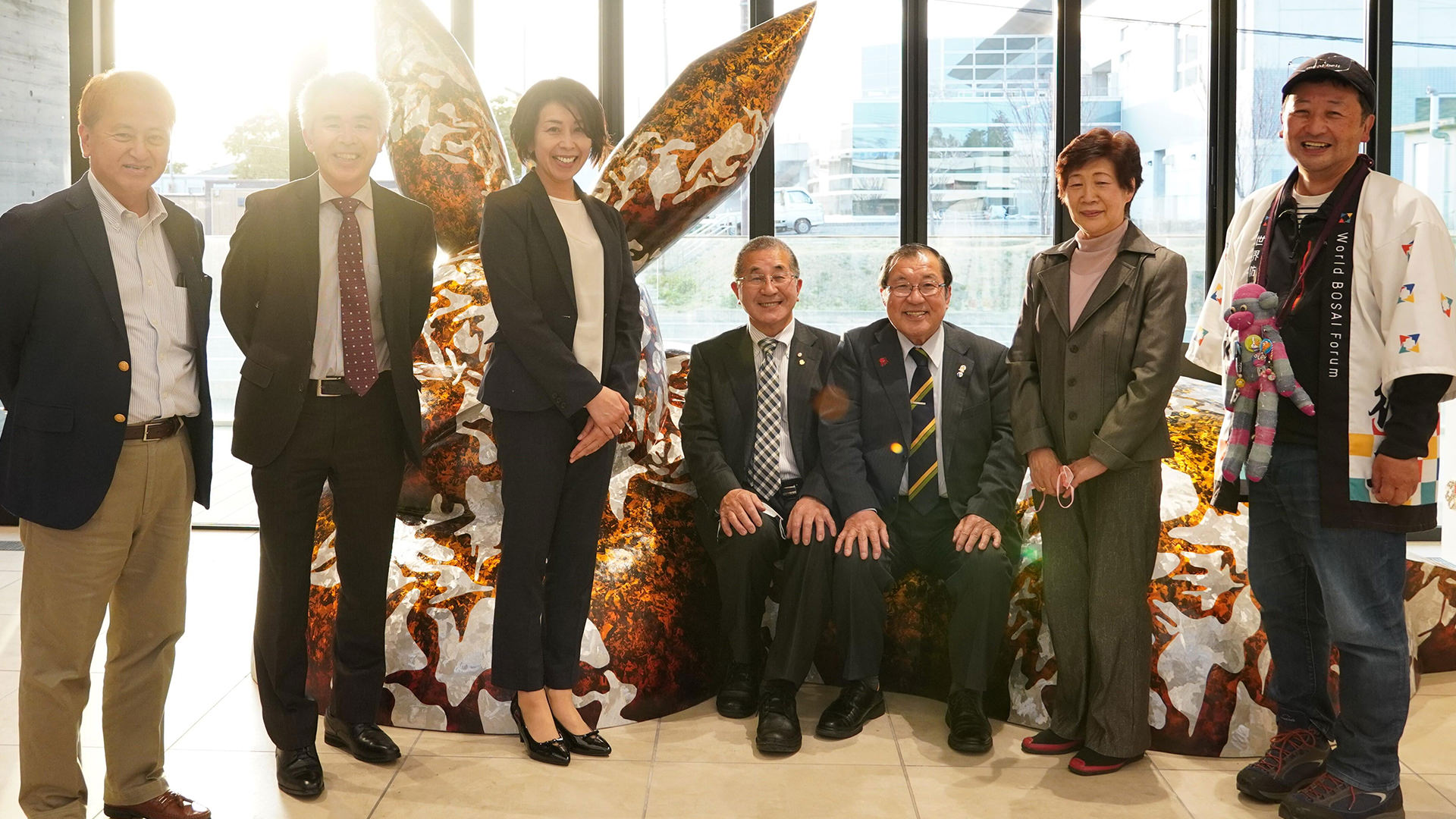
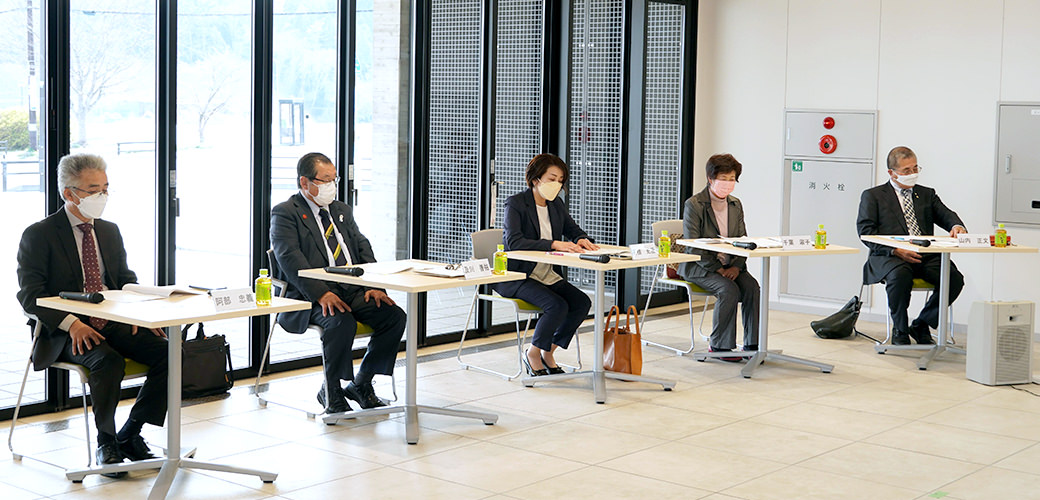
Following the interview with Mayor Jin SATO, a roundtable discussion was held with residents of Minamisanriku Town who were affected by the disaster and have been working towards the town's recovery with strong determination, having experienced various things through their lives and work.
Looking back on activities since the earthquake, we asked everyone questions such as, "What is the source and secret of your energy?" and "What was the most memorable thing about the recovery?" Here is a brief overview of the responses.
INDEX
- Roundtable discussion members
- What is the source or secret of your energy?
- What was the most memorable thing about the recovery?
- Part 2: Listening to the Minamisanriku Town's residents roundtable discussion "Recovery and the future from the perspective of the town's residents"
Roundtable discussion members
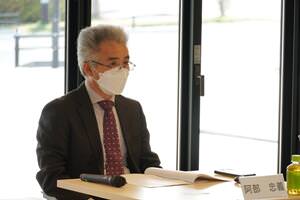
Tadayoshi ABE
Representative of Board of Directors of Minamisanriku Training Center
They operate the Minamisanriku Training Center, which they established in collaboration with Taisho University, and YES Kobo, a social business space they launched. They are currently conducting learning projects, online tours, and experiential learning activities in cooperation with the local community.
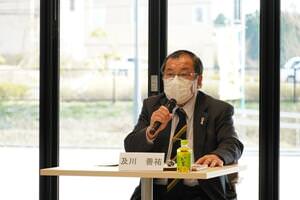
Zenyu OIKAWA
Former Chairman of the Shizugawa District Community Development Council
The fifth-generation President (now chairman) of Oizen Shoten, a manufacturer of sasa kamaboko founded in 1880 (Meiji 13). As the first chairman of the Shizugawa District Community Development Council, he led efforts to relocate residences to higher ground and create an environment that evokes the scent of the sea. He has served as vice chairman of the Fukko-ichi (recovery market) Organizing Committee since immediately after the earthquake.
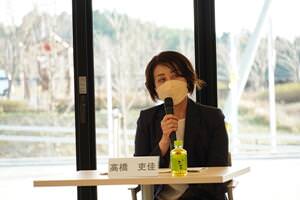
Rika TAKAHASHI
Minamisanriku Town Social Welfare Council
She worked for the Social Welfare Council for 30 years. Based at "Yuino Sato," which was completed after the earthquake, she develops community welfare activities. From babies to the elderly, people gather to support community revitalization and activities in which disaster victims help other disaster victims.
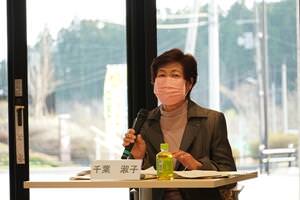
Toshiko CHIBA
Former Chairman of the Women's Division of the Minamisanriku Chamber of Commerce and Industry
She married into a family in Minamisanriku, originally from Motoyoshi Town (now Kesennuma City), 53 years ago. Since reopening her shop after the earthquake, she has moved it five times, receiving much support each time, which has led to its current permanent location. As the head of the women's division of the Chamber of Commerce, she has been involved in exchanges with women's divisions of neighboring chambers of commerce and industry that were affected by the disaster.
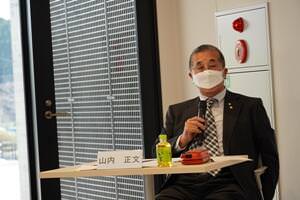
Masafumi YAMAUCHI
Chairman of Minamisanriku Chamber of Commerce and Industry, Chairman of the Fukko-ichi Organizing Committee
The representative of Yamauchi Fish Market, which has been in business for 60 years. He has been selling online for 20 years. With the strong support of the disaster prevention morning market network that he established with shopping districts nationwide before the earthquake, he held the first Fukko-ichi the month after the earthquake, and took the lead as the executive committee chairman. He wants to rebuild the town through the power of business.
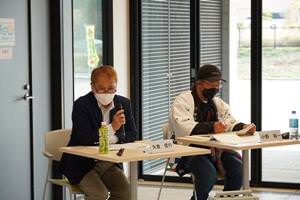
Moderator: Nobuyuki YAGURA
Urban Development Consultant
Interpreter: Professor Yuichi ONO
International Research Institute of Disaster Science, Tohoku University
What is the source or secret of your energy?
YAMAUCHI: Immediately after the disaster, I checked four shops and factories in town and evacuated to Shizugawa Junior High School. I witnessed the dust rising from the Tsunami on the coast, and then the town being devastated in the 12 minutes or so until the water receded. About 600 people had taken refuge in the shelter, but the day after the earthquake, 300 rice balls arrived from the inland Iriya district, and we all shared half of them. I wanted to revitalize the town through the power of commerce, so I called on members of the Chamber of Commerce and Industry to hold a Fukko-ichi. We had nothing on hand, but Waseda Shopping Street, a member of the Disaster Prevention Morning Market Network, took the lead and rushed to our aid, bringing goods to sell and tents. People from Kasaoka City in Okayama Prefecture and Sakata City in Yamagata Prefecture have participated almost every time since then. I feel that we must repay the kindness we have received from shopping streets all over the country.
CHIBA: After the disaster, about 600 people took refuge at Utatsu Junior High School, and we lived there for 75 days. There were 40 to 50 children, but none of them cried. I was in charge of cooking, so I racked my brain every day trying to figure out what to feed 600 people. Sometimes we went and pick up food and seasonings that had fallen on the beach and made it in time with that. On April 27th, their Majesties the Emperor and Empress visited the evacuation center. The children, who had been making a fuss asking "Who is the Emperor?!", suddenly became quiet and sat properly on the floor the moment their Majesties entered the evacuation center. Their Majesties split into two groups and spoke to each evacuee individually. When I said to Empress Michiko, "I hope you stay healthy forever!", she smiled and replied, "Thank you!" I could hear voices around me saying, "Let's do our best from now on!", and it was truly an impressive day.
TAKAHASHI: I think everyone here today feels the same way, but I believe we've been able to move forward because of the feeling that "we have to work hard for the sake of those who wanted to live but couldn't because of the earthquake." From the perspective of the Social Welfare Council, we feel that we have overcome this difficult situation together with the residents. What was good was that we listened to the voices of the town's residents, asking them what they wanted to do now and what would make them happy, and then turned that into action and didn't stop moving forward. Whenever we felt like we were about to stop, we encouraged ourselves by telling ourselves that we couldn't stop, and kept moving forward. Thanks to that, we were able to overcome COVID-19 as well.
OIKAWA: For the sake of those who died, I felt that "even if it's just a false bravado, we have no choice but to be cheerful and move forward. We have no choice but to look ahead." After the disaster, I evacuated to Shizugawa Elementary School, where I stayed for 59 days, and then Hotel Kanyo took me in for another 43 days, for a total of over 100 days of shelter life before I moved into temporary housing in early July. As a merchant, I felt I had to do something to revitalize the town. That's why I started the Fukko-ichi. I felt that we couldn't look down, couldn't look back, we had no choice but to look ahead. We must make this a town that never forgets the kindness we received from people all over Japan and the world. I keep telling my grandchildren to continue to repay this kindness. To that end, I want to become a cog in the machine of the town and create a prosperous, bright, and vibrant town that will surely recover. That is the kind of life I want to live. Lately, I've been thinking about this a lot: "Continue towards recovery, repay kindness, pass on a heart of gratitude to my next generation."
ABE: Since I started the exchange business, if I wasn't energetic, customers wouldn't come and I wouldn't be able to sell anything, so I've been working hard with a forced cheerfulness. When I started YES Kobo, everyone was in a tough situation, so much so that I couldn't get through it without telling jokes. Since then, I've started telling puns, and I thought about whether I could do business with puns, so I put out various products, and they were well-received and sold quite well, so I got carried away. I call it "Social Business." I like to think up new things and work on them, and I'm good at turning anything from "0" to "1".
What was the most memorable thing about the recovery?
ABE: At the time of the earthquake, I was a town employee, and in a personnel reshuffle immediately after the disaster, I became the director of the Iriya Community Center. I was frustrated because I felt like I had been excluded from the recovery projects, but when I actually started working on April 1st, I realized that there were things I could do for the recovery even while in the Iriya area, such as taking care of evacuation centers, providing meals, and arranging volunteers. With support from Taisho University and others, I came to believe that connecting with various people was the shortest path to recovery. While still a town employee, I established YES Kobo, revived Octopus-kun, and also opened "Iriyado." I have been passionately working on recovery and regional revitalization while juggling my roles as a civil servant. I took early retirement from the town hall four years after the earthquake, and I am deeply impressed by how the mayor and my superiors at the time kindly sent me off. I have a strong feeling that I was able to work within a relationship of trust, and I continue to be involved in community development even after retirement.
OIKAWA: There are many things that left a lasting impression, but what's most important is human kindness and the encounters we had. I was truly grateful to realize that there are people in the world who are so supportive and helpful. I can't fully express all the regret and sadness I felt after the earthquake, but I consider the people I met in the 11 years since the earthquake to be my treasures. It would be better if the earthquake never happened, but if it hadn't happened, I wouldn't have met so many people. I am very grateful for that. When I started the Fukko-ichi, fellow shop owners from all over the country told me this: "At times like these, it's important to keep fighting and keep stepping into the ring, even if it means using someone else's loincloth." They also encouraged me by saying, "We'll leave all the proceeds, so do it again next month, we'll come again!" Thanks to that kind of support, the Fukko-ichi has been held 99 times. 2017 was a year of great change for me. In February, my house was rebuilt, in March the permanent Sansan Shopping Street opened, and in June I was able to move back from the neighboring city of Tome and build a new factory in town. I am very impressed by the warm support I received from people all over the country.
TAKAHASHI: I think the past 11 years since the earthquake have been a time for me to move forward with a sense of defiance. It was because of the earthquake that I realized how enjoyable the work at the social welfare council is, through my interactions with local residents. The earthquake further strengthened the bonds with the people in the community, and many people from far away reached out to help, giving us lessons and insights, which left a very strong impression on me. As for my family, I feel that I was able to support my three children in their baseball club activities until the very end. Next year, my third child will finally start a job.
CHIBA: After the earthquake, the women's divisions of the Chambers of Commerce and Industry held exchange meetings with other regions, and I was surprised to hear that the Rikuzentakata Chamber of Commerce and Industry, Women's Division had been checking on the safety of its members since the day after the earthquake. We were preoccupied with what to feed the people in the evacuation centers, but there, several members had lost their lives, and they took us to a temple where many remains are enshrined, and we also offered our prayers. During our exchange with the Kurikoma Chamber of Commerce and Industry, Women's Division, we saw the scars of the Miyagi Inland Earthquake and listened to lectures by those involved, which made us realize once again the terror of natural disasters. I also remember visiting the Onagawa Nuclear Power Plant as part of the activities of the "Sanriku Block," which includes organizations from Karakuwa to Higashimatsushima. Under strict security, we toured various facilities and received explanations about the difference in ground level between the Onagawa Nuclear Power Plant and the Fukushima Daiichi Nuclear Power Plant. It has been announced that it will restart in 2024, but the reputational damage to Fukushima still remains, so I cannot wholeheartedly support it. I sincerely hope for safe and reliable operation.
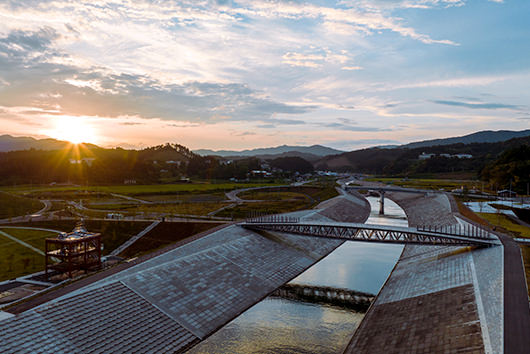
YAMAUCHI: In terms of business, the opening of the temporary Sansan Shopping Arcade in 2012 is particularly memorable. It was a day of heavy snowfall, but many people came. Fellow shop owners from all over the country came and helped make the opening a success. The reason I was so happy about the opening of the temporary Sansan Shopping Arcade was that I could now open my shop every day. The Fukko-ichi is only held once a month, but at Sansan Shopping Arcade, I can interact with customers every day. As a business owner, this was the most wonderful thing for me. I also really like the Nakahashi Bridge that connects Sansan Shopping Arcade and the Recovery Memorial Park. I would like to make it a date spot someday. I am also looking forward to the Denshokan, which is currently under construction and scheduled to open in October, and I would like to make Sansan Shopping Arcade and the Denshokan the number one of "roadside station" in the country.
Part 2: Listening to the Minamisanriku Town's residents roundtable discussion "Recovery and the future from the perspective of the town's residents"
It was clear that the experiences of those who lived in evacuation centers after the disaster, and the recovery and reconstruction activities at their workplaces and homes, were unimaginably difficult. We also learned how they overcame hardships with the support they received from people in surrounding areas and friends across the country. This reinforced the importance of "meeting and connecting with people" and "living positively and energetically even in the midst of hardship." Recovery activities in Minamisanriku will continue. Once again, we were able to witness the strong determination and efforts of the people in the disaster-stricken area, and feel hope and energy for further recovery.
https://www.youtube.com/watch?v=C6cUFUZabpg