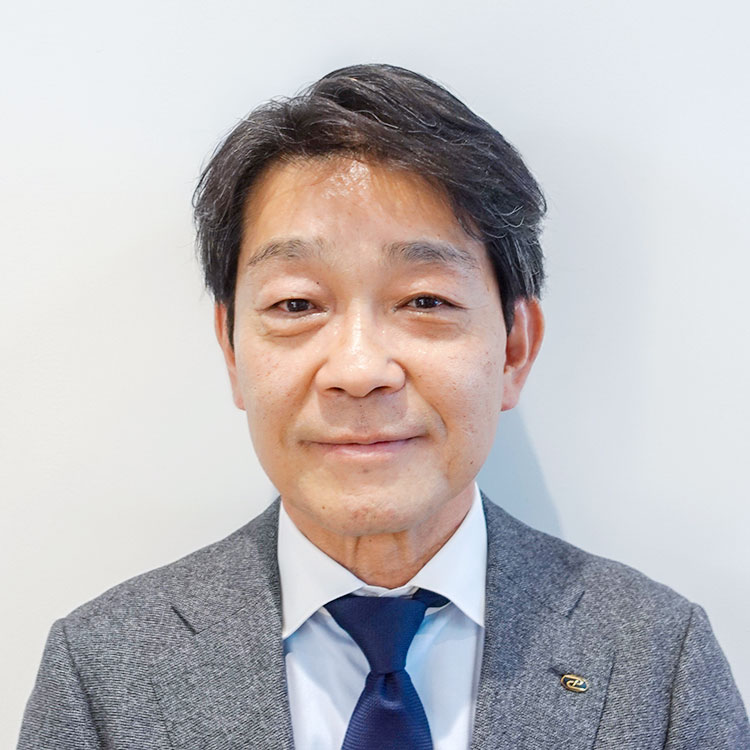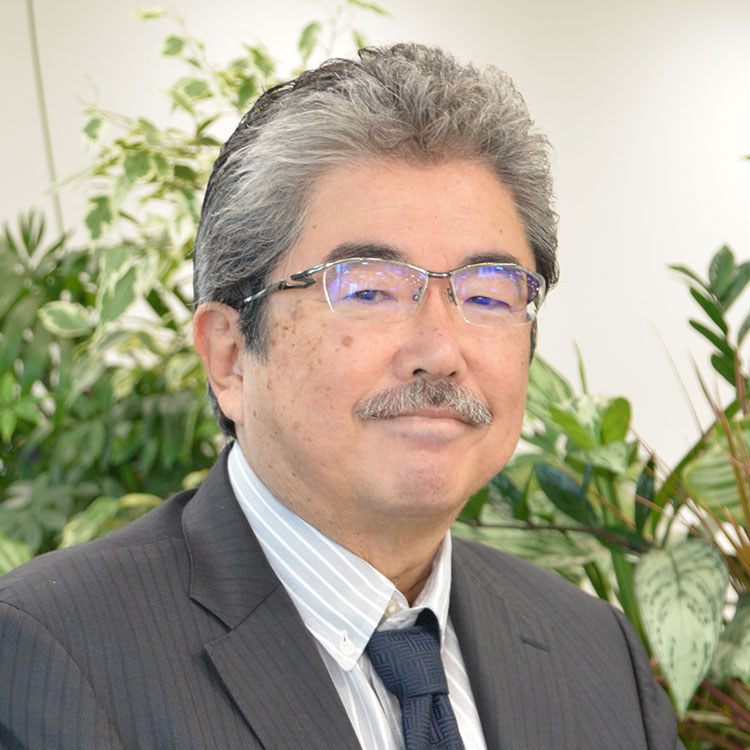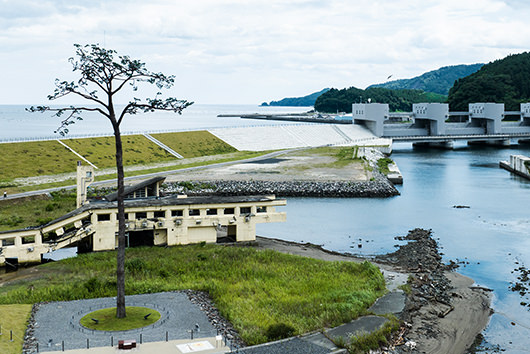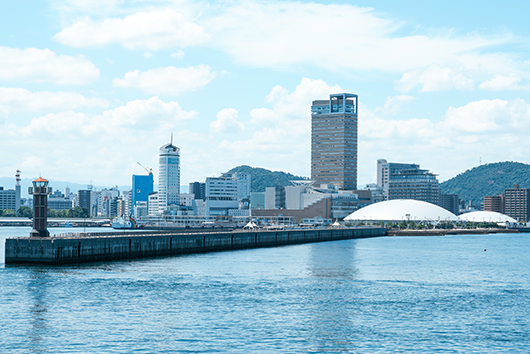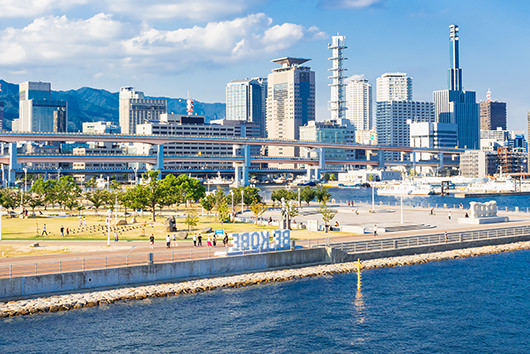


It has been 10 years since the Kumamoto earthquake, an unprecedented event in the history of Japan, in which a series of violent tremors of intensity 7 on the Japanese seismic intensity scale occurred at the same time. PACIFIC CONSULTANTS Also Kyushu Branch Office (Kyushu Headquarters from October 2025) has played a part in the restoration and reconstruction project headed by (Kyushu from October 2025), which aims to "revitalize and create a safe and secure Kumamoto". In the Kyushu region, which is prone to natural disasters such as earthquakes, typhoons, and floods, PACIFIC CONSULTANTS plays an increasingly important role in disaster prevention and mitigation, as well as in social infrastructure services that support the local economy and the lives of citizens. We interviewed Takuya NAGATA, head of Kyushu Headquarters, and Takuro NAKANO, formerly of General Manager, Kyushu Branch Office and Senior Counselor, to find out how they will contribute to the development of the region as Kyushu Headquarters.
INDEX
- Being responsible for 65 projects related to the restoration and reconstruction efforts following the earthquake
- Unique disaster prevention and mitigation efforts for Kyushu, a region prone to natural disasters
- A variety businesses running in Kyushu
- Forging the future of Kyushu together with the people of the region
Being responsible for 65 projects related to the restoration and reconstruction efforts following the earthquake
—What did you do when the earthquake hit?
NAKANO: The foreshock occurred at 9:26 p.m. on the night of April 14, and the main quake occurred a day later at 1:25 a.m. I was at home in Fukuoka. Fukuoka was also shaken up quite a bit, but I think the intensity was around 4 to 5. When I learned from the news that the epicenter of the quake was very close to Kumamoto City, I knew that this was a serious situation. Kumamoto City is the third largest city in Kyushu (after Fukuoka and Kitakyushu) and has a population of over 700,000. The damage must have been great. The next morning, we set up a Disaster Response Headquarters headed by former General Manager of the Branch Office, OMOTO (now Representative Director, President Executive Officer) and proceeded to confirm the safety of our employees first.
—Mr. NAGATA, you were in Tokyo at the time, right?
NAGATA: I belonged to Road & Highway Dept. of Transportation Infrastructure Div. When I saw the news and learned about the extensive damage, I felt a sense of urgency, realizing that there were many things that PACIFIC CONSULTANTS had to do.
—How did the response to the earthquake proceed at the local site?
NAKANO: Around the time we finished confirming everyone's safety, we started receiving a steady stream of requests from local governments for damage assessments and other services. We couldn't possibly handle it with just the personnel in Kyushu, but the Headquarters immediately decided to "handle it as the whole company," and engineers rushed in from all over the country, including Hokkaido, Tokyo, Sendai, Nagoya, and Osaka, to help, which allowed us to get things running again. I was really impressed by the top management's quick decision-making and the organizational strength to immediately send support teams from all over the country, even if it was within our own company. Many people also provided support while continuing their normal work at their respective regional Headquarters and branches, even if they couldn't go to the site, and I'm truly grateful for that.
NAGATA: Looking at the records from that time, Kyushu Branch Office was contracted to handle as many as 65 projects related to the Kumamoto earthquake. I think it was an all-out effort.
NAKANO: I was impressed not only by their organizational strength but also by their high level of technical expertise. At the time, they were developing a vehicle called "MIMM (Mobile Measurement Measuring Device)" which was equipped with a new technology that processed images in 3D for use in inspections, and they were using it to conduct voluntary inspections of dozens of major tunnels in Kumamoto Prefecture.
NAGATA: Looking back at the restoration and reconstruction efforts that followed, I really feel that the company-wide efforts made after Great East Japan Earthquake have paid off. I think that the knowledge we gained about what problems would arise immediately after the disaster, and what we should prioritize and what we should address, was passed down to future generations.
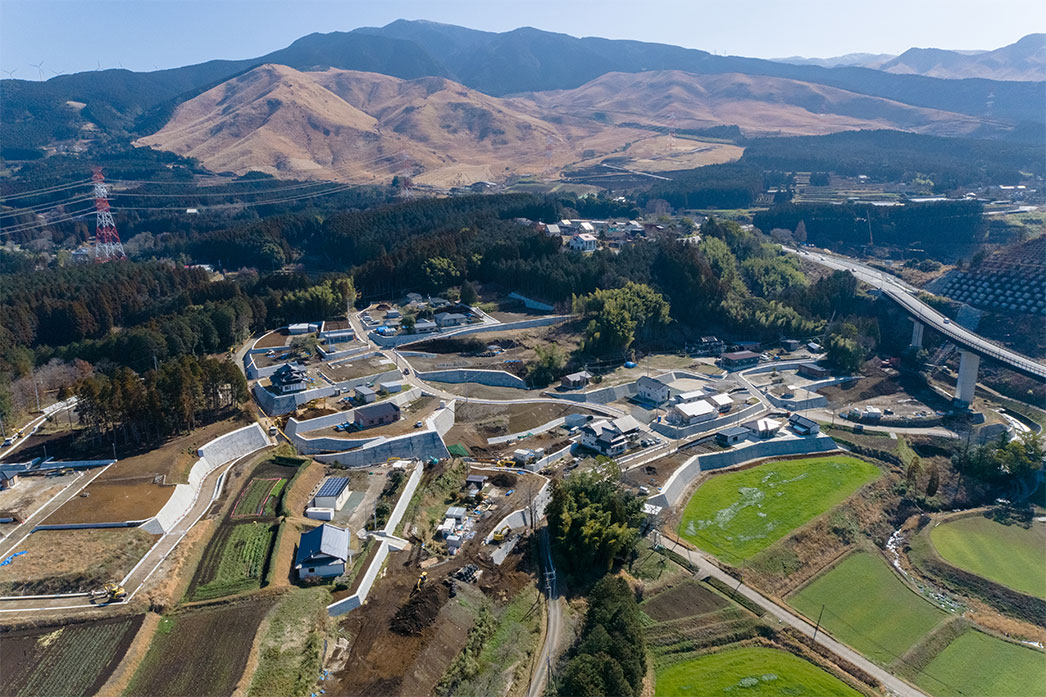
NAKANO: Many of our members had actually worked on support operations in Tohoku, so I think they knew what needed to be done. In the reconstruction project for the six hamlets of Nishihara Village, which were devastated because they were located on the fault zone where the earthquake originated, we aimed for creative reconstruction from both a hardware and software perspective, working together with the residents. I think the experience and lessons learned from the restoration and reconstruction work from Great East Japan Earthquake were put to good use. In the July 2020 torrential rains following the Kumamoto earthquake, the Kuma River overflowed, causing immense damage in Hitoyoshi City, with 21 deaths, 902 buildings completely destroyed, and 1,452 buildings partially destroyed. At that time, PACIFIC CONSULTANTS was contacted by the national and local governments immediately after the disaster, and we took action on-site. This was because of the positive evaluation we received for our response to the Kumamoto earthquake 2016. There were particularly high expectations for our project management work and urban development plans that looked ahead to the post-reconstruction period. The trust we've earned—the feeling that we can rely on PACIFIC CONSULTANTS—is a result of the efforts our branch offices have made so far, not just in disaster response, and it's a strength that has been passed down through generations. I'd like to express my gratitude to all my predecessors.
Unique disaster prevention and mitigation efforts for Kyushu, a region prone to natural disasters
—Kyushu is originally a region prone to natural disasters such as floods, isn't it?
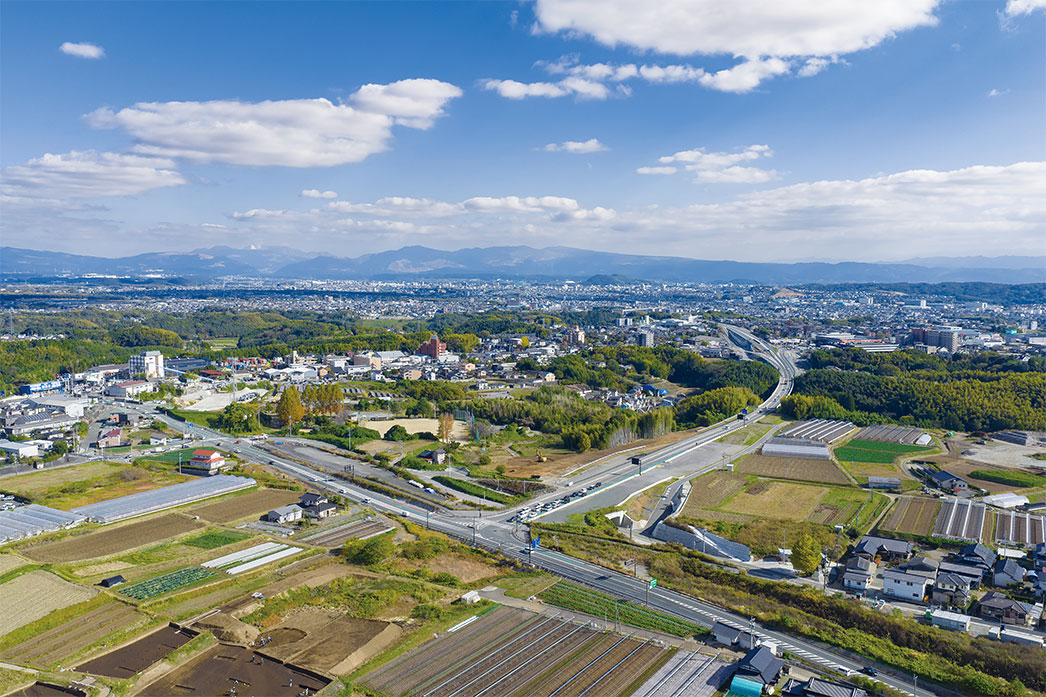
NAGATA: Yes, there are a lot. Heavy downpours occur frequently at the end of the rainy season, and it is also a region frequently hit by typhoons. After the Kumamoto earthquake, floods have occurred every year since 2017. There is also data showing that about 60% of landslides that occur nationwide are concentrated in Kyushu. There are also many active volcanoes, such as Sakurajima, Aso, and Kirishima. Given this background, I think that the awareness of local people to protect their lives and industries from disasters is higher than in other regions. Employees at our Kyushu Headquarters are also working with a high level of awareness, especially in their work involving rivers and ports, where disaster prevention and mitigation are crucial.
NAKANO: Kyushu's disaster prevention efforts go beyond simply strengthening facilities. For example, in the case of ports, we propose the development and review of BCPs (Business Continuity Plans) to private companies operating in the area, and we are trying to broaden the base of disaster prevention and mitigation by taking a soft approach. We also place importance on the concept of pre-disaster recovery preparation, and we propose preparing soft measures in advance so that we can respond to any type of damage that may occur, by anticipating what will happen when a disaster occurs. I believe that what we are able to do is unique to our company, which has been involved in the recovery and reconstruction process in various regions. We have not yet achieved sufficient results, but I believe we have been able to create the foundation for it.
However, ultimately, it is people who help those in need. No matter how well-prepared we are in terms of hardware and software, I believe that in the end, it is people who help people. Many employees at Pacific Consultants have been involved in reconstruction work, such as the support operations for Great East Japan Earthquake and Noto Peninsula Earthquake, and the reconstruction project for six communities in Nishihara Village after the Kumamoto Earthquake, and have received recognition for their efforts. I would like to promote this point more both inside and outside the company, and show what kind of company Pacific Consultants is, what kind of people work here, and what kind of feelings they have when they carry out their work.
NAGATA: I would say that we haven't done a very good job in that area, and it's something we need to reflect on. It's also the 10th anniversary of the Kumamoto earthquake, and we've just started operations as a regional Headquarters, so we will strengthen our communication from the Kyushu Headquarters.
A variety businesses running in Kyushu
—There are quite a few initiatives in Kyushu that are attracting attention nationwide, aren't there?
NAKANO: When I was General Manager, I always said that we should create work that is unique to Kyushu, ahead of the rest of the country. About 20 years ago, we worked on developing a "drivability map" that utilizes probe data from automobiles. We meticulously analyzed road width, number of lanes, size and number of curves, gradient, and separation from sidewalks and bicycle paths, and evaluated roads not just in terms of distance, but from the perspective of "drivability," and represented it on a map. It spread from Kyushu to the rest of the country and even led to efforts to link it with car navigation systems.
The organizational culture of encouraging challenges even if they fail has existed for a long time, and in that respect, it goes back even further in history, with Nagasaki Airport being one example. It was the world's first full-fledged offshore airport, built on reclaimed land on Minoshima Island in Oura Bay, and Pacific Consultants also designed it.
NAGATA: We've been continuously involved in work related to Nagasaki Airport, and more recently, we were in charge of planning, surveys, and environmental assessments for the second runway at Fukuoka Airport, which opened in March 2025. In terms of infrastructure development, we've also been involved in a lot of work related to the Kyushu Shinkansen.
NAKANO: We were commissioned to develop the basic plan for the Kurume Shinkansen station and to design the station building for Shin-Tamana station. I was also in charge of the Kurume station project. Subsequently, our company was commissioned to design the station plazas for Takeo-Onsen station and Shin-Omura station on the West Kyushu Shinkansen line, and we are currently working on that as well.
—What other projects are there besides infrastructure-related projects?
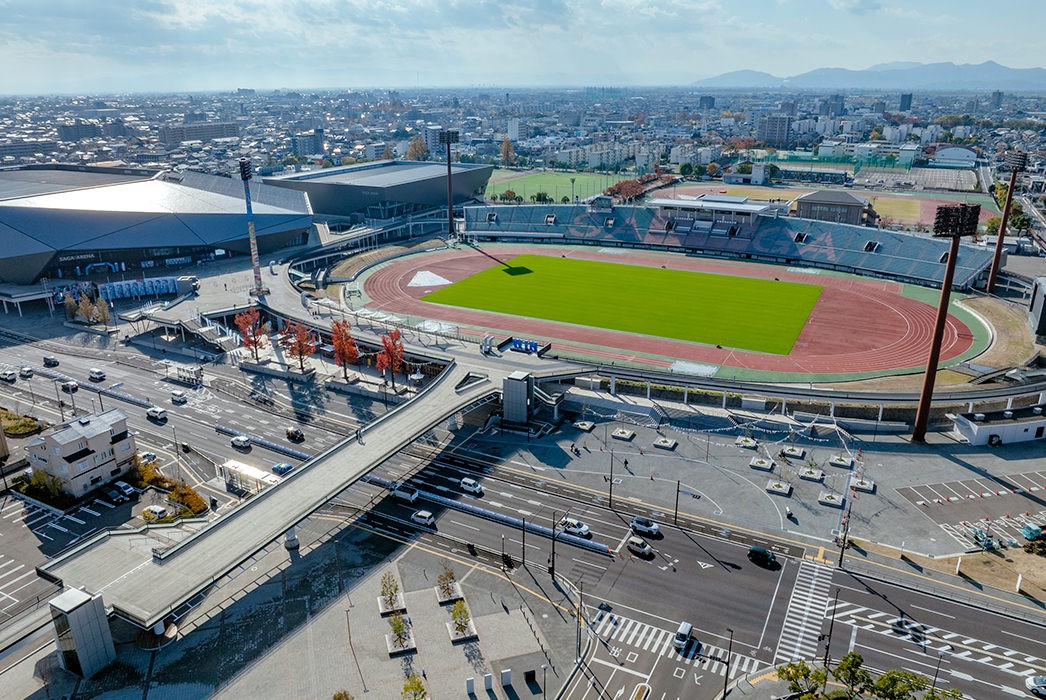
NAGATA: Recently, we've been working on the integrated development project of Eiko Bridge at SAGA Sunrise Park and the plaza west of the Saga City Cultural Hall. It's a comprehensive sports and entertainment facility centered around Kyushu's largest multi-purpose arena, and it's a project that has attracted nationwide attention in terms of regional revitalization utilizing sports facilities. After that, we were in charge of the design for Fukuoka City's "Boat Race Fukuoka Park Project," which will integrate an indoor skateboard park and a lively entertainment facility, and construction is currently underway with the aim of completion in the fall of 2026. As it will be the first and largest skateboard park in Japan, this is also attracting nationwide attention. In addition, we are involved in various initiatives that will build new development in the Kyushu region, mainly focusing on sports and cultural facilities, such as the PFI project for the comprehensive sports park in Nakagawa City, Fukuoka Prefecture, the feasibility study for introducing the use of the former site of Nagasaki Prefectural Government Building (cultural arts hall, plaza, etc.), the formulation of the basic plan for the development of children's play areas in Miyakonojo City, and the sounding survey for business feasibility studies in urban development in the main port area of Kagoshima Port.
Forging the future of Kyushu together with the people of the region
―In October 2025, Kyushu Branch Office became the Kyushu Headquarters. What are the prospects for this new structure?
NAGATA: As Headquarters, we are strengthening our functions, including our human resources and technological capabilities, so that we can become even more rooted in the Kyushu region and provide high-quality services tailored to local customers and markets. Currently in Kyushu, the semiconductor industry and manufacturing industries are accumulating, and large-scale projects such as offshore wind power generation are underway. In addition, Kyushu has two rocket launch sites, the "Tanegashima Space Center" and the "Uchinoura Space Center", and is expected to develop as a base for Japan's aerospace industry. Furthermore, it is a region with great potential for development, as it is rich in tourist resources such as the sea, mountains, and hot springs, attracting many inbound tourists. For these reasons, I think PACIFIC CONSULTANTS has a significant role to play. As I mentioned earlier, disaster prevention and mitigation preparations are especially important in Kyushu. I would like all employees to approach their daily work with a multifaceted perspective, thinking about how this technology could be used for disaster prevention, or conversely, whether a disaster prevention perspective should be incorporated into certain areas.
NAKANO: I'm no longer on the front lines, but I hope our Kyushu Headquarters will be a solid foundation and become the leader of comprehensive consulting in Kyushu. We've already been grateful for our efforts in transferring technology to local consulting firms that have become business partners, and for supporting the preparation of Professional Engineer (PE) examinations. I believe it's important to actively open up our technology and know-how rather than hoarding it, so that we can grow together and become a force for the region. That should lead to strengthening disaster prevention and mitigation throughout Kyushu and to further development.
NAGATA: That's right. We will do our utmost to ensure that local businesses and residents feel fortunate to have PACIFIC CONSULTANTS' Kyushu Headquarters here.
--We look forward to your new endeavors as Headquarters. Thank you very much.