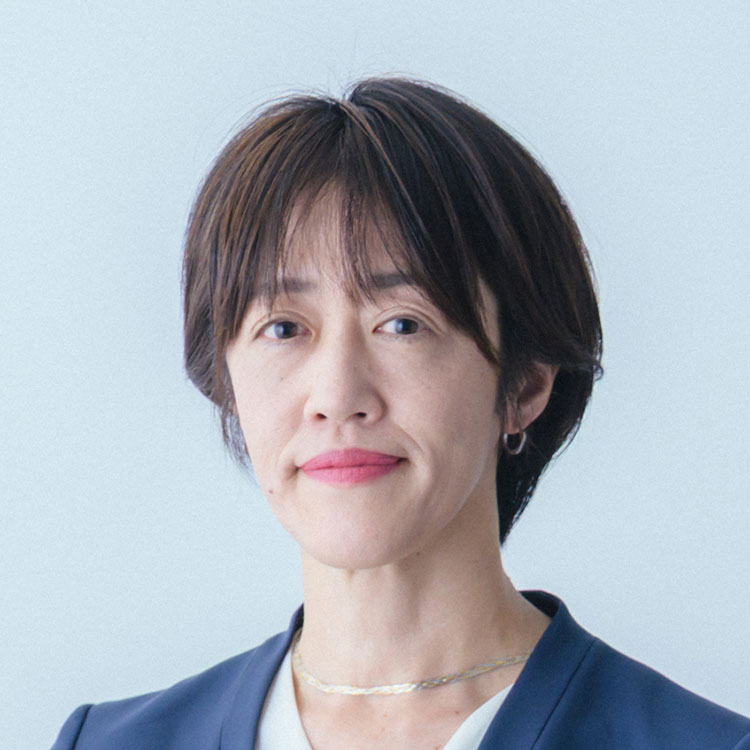

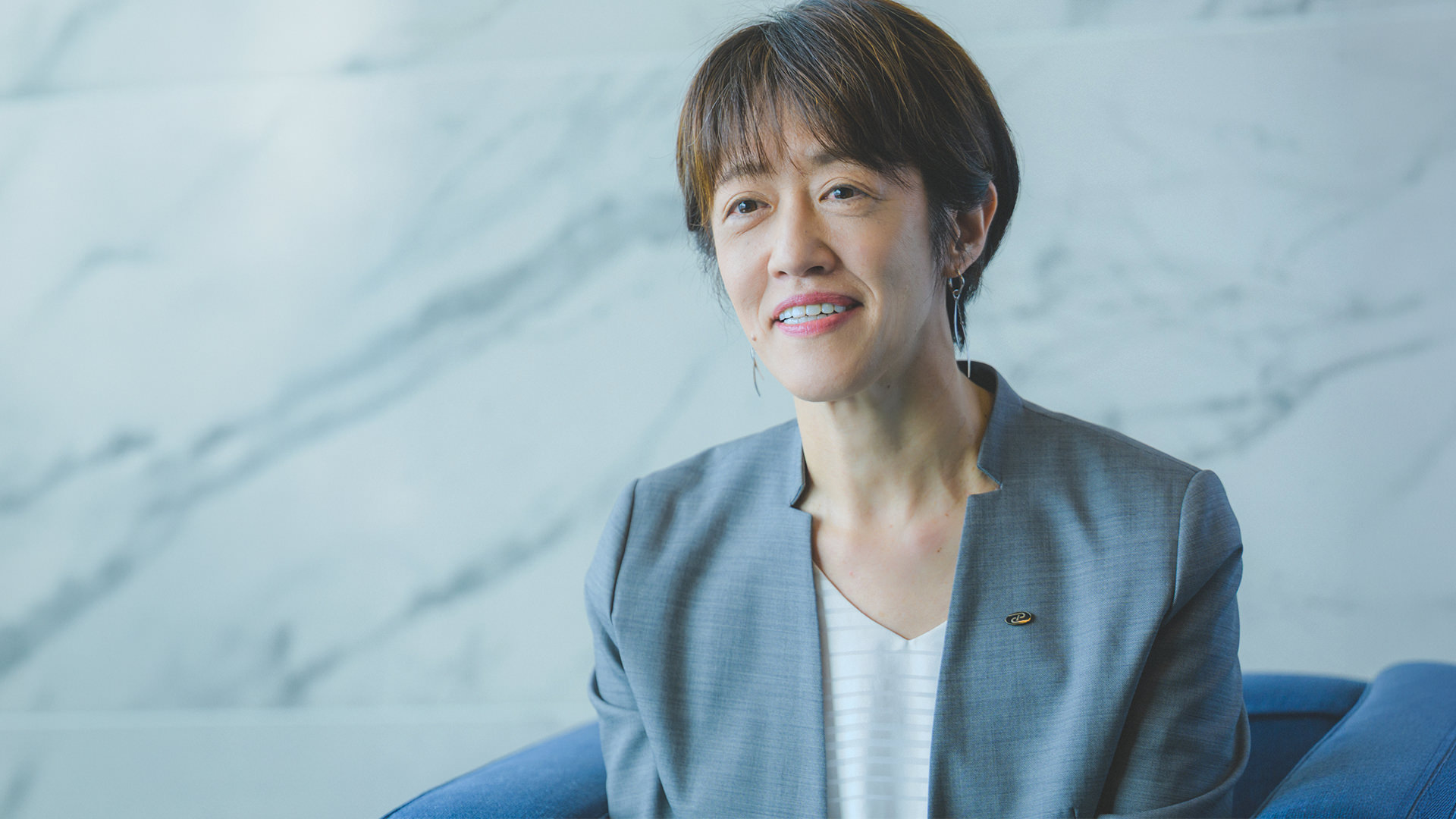
Pacific Consultants Group believes that "the greatest asset of a consulting firm is its people." They aspire to be a company where each employee can maximize their potential and grow together, and are actively working on work-style reforms, promoting DE&I, career development support, and personnel system reforms. We spoke with Director and Managing Executive Officer, Satoko OKANO, who is at the forefront of this organizational transformation, about their past initiatives and the organizational vision they aim for.
INDEX
- What Companies Involved in Social Infrastructure Development Are Expected to Deliver?
- We will make the system as comprehensive as possible. We want you to make full use of it
- Let's take even a small step towards change
- Becoming a company of choice through communicating our value
What companies involved in social infrastructure development are expected to deliver?
—The industry that supports social infrastructure is currently at a major turning point, and I think what is required of organizations and people is also changing. After joining the company, OKANO was in charge of urban development and park design project, and then served as General Manager of Project Management Dept. and General Manager of Internal Audit Office directly under President, and since 2024 has been leading talent strategy as executive officer in charge of human resources. What do you think the industry is in right now?
OKANO: Under the post-war period of rapid economic growth, social infrastructure such as expressways, bullet trains, and sewage systems were built at a rapid pace for a long time. However, development has reached a certain extent, and with the current declining population, it is no longer an era where we can continue building as before. On the contrary, as infrastructure ages after 40 or 50 years, the number of people involved in maintenance decreases, and natural disasters become more severe and frequent. We must change our way of thinking significantly and consider how to maintain the existing infrastructure and use it for a long time while conducting inspections and preventative measures.
—Supporting the efforts of local governments is also a major challenge, isn't it?
OKANO: Local governments are in a difficult situation both financially and in terms of manpower. As a result, efforts have been made to develop public-private partnership schemes such as PPP/PFI and to provide project support such as PM/CM services. I believe that the importance of these services will only increase in the future. Even with PPP/PFI, rising construction costs and labor shortages make it difficult for private companies to enter into long-term contracts of 20 years or more. How can we mitigate the risks for private companies and create an environment where they can easily perform at their best? The development of new business models is also necessary. I believe this is a major role that we must play.,
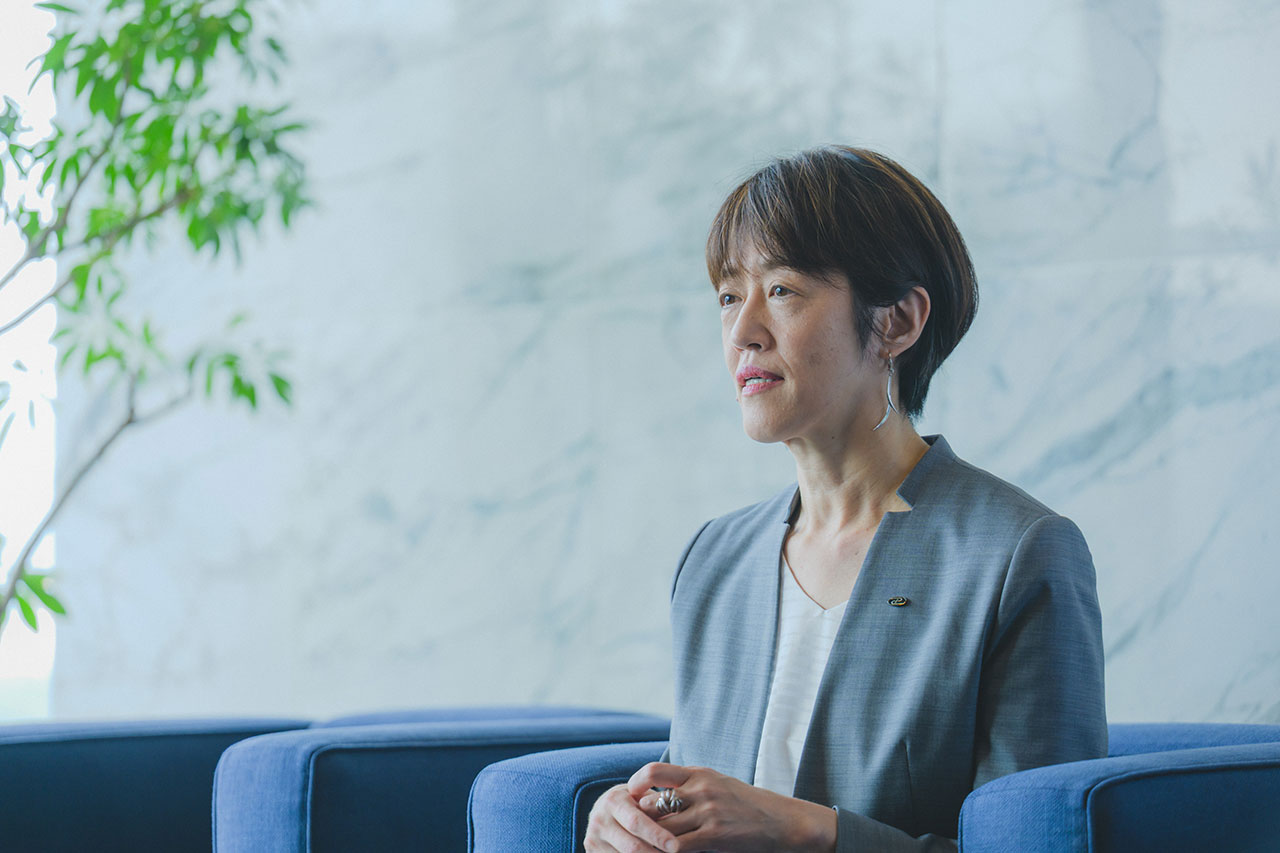
We will make the system as comprehensive as possible. We want you to make full use of it
—We need a creative organization where each individual can fully utilize their abilities.
OKANO: The greatest asset of a consulting firm is its people. Up until now, much of the work may have been about delivering deliverables by a set deadline according to the specifications provided. Of course, that is important, but from now on, certain parts may be replaced by the use of AI, and what will be required instead is the "conceptualization capability to think of other ways of doing things, and the ability to actually "implementation capability" deliverables into local infrastructure and make them work. This cannot be left to AI. We need the rich imagination of each individual and a diverse team that comes together from that. To achieve this, I believe it is important to create an environment where everyone has the opportunity to try various things and learn and grow autonomously from those experiences. I don't think it's enough to think within the framework of traditional training and development, where you learn things in order, and then move up if you pass a test of your proficiency. Furthermore, as a prerequisite, we need an environment where people can work in a healthy and secure environment, both physically and mentally. I consider health not as an employee benefit, but as a management issue. I believe that people can grow and create new value only when they have an environment where they can take on challenges with peace of mind."
The traditional ladder-shaped career path, where employees progress straight up a predetermined path, fails to produce individuals who can find new solutions in a situation where various social issues are intricately intertwined. In our new personnel system, we call it a "jungle gym-type career path," where we provide opportunities for growth in various directions—laterally and diagonally—by changing areas of responsibility, moving from the field to management, going abroad, and so on, so that employees can find their own paths to growth. Job rotations, internal one-job exchange programs, and open recruitment systems are all for this purpose, and we also have a career advancement leave system for those who want to take a year or two to study domestically or overseas. Furthermore, since changing jobs and experiencing the outside world can lead to new growth, we also have a "Welcome Back Recruitment (Alumni Recruitment)" system that keeps the door open for those who wish to return to the company. Our basic idea is not that the company will nurture you, but rather that we create an environment so that you can seize opportunities and grow on your own.
Let's take even a small step towards change
—While infrastructure maintenance is one issue, there are numerous social challenges that need to be addressed, such as decarbonization and disaster prevention. What kind of personnel do you think are needed right now?
OKANO: What I'm looking for going forward are people who can change themselves, people who can connect with others, and people who can take a step forward and act on their own while looking towards the future.
—What does it mean to "change themselves"?
OKANO: Instead of just continuing to do the same thing over and over, I'm talking about people who can jump into new worlds, such as deepening their expertise in their field of specialization, boldly trying out a different field, or reskilling and challenging themselves to utilize their previous career in a different way. I would be happy if more people were not afraid of change and would take on challenges. I think there are people who don't want to change and want to continue doing the same thing. They may have had successful experiences and can't leave. But even if it's difficult to make big changes, when an opportunity comes along to try making a small change, I think that accepting it and giving it a try, rather than rejecting it outright, is also a small "change."
—What kind of a person "who can connect with others"?
OKANO: PACIFIC CONSULTANTS GROUP's strength lies in its comprehensive capabilities. We have expert engineers in every field within the group. By communicating with diverse people and connecting them, we can come up with new ideas and actually make those connections, which leads to the creation of new value. It is only when we can do that that we can demonstrate the comprehensive capabilities that are characteristic of PACIFIC CONSULTANTS GROUP, a group of engineers from various fields. I believe that comprehensive capabilities are not about one person being able to do everything. It is the power of an organization to create value that cannot be created by one person alone, by connecting people with diverse expertise and experience. That is the comprehensive capability that is characteristic of PACIFIC CONSULTANTS GROUP, and it is a strength that we want to further refine in the future.
—The third is "ability to envision and create the future".
OKANO: Speaking of the future, this is a bit of a leap, but are you familiar with the Vienna Philharmonic New Year's Concert, which is televised every year on New Year's Day? Every year, a renowned conductor is invited to perform traditional repertoire such as Viennese waltzes, and the concert concludes with the Radetzky March accompanied by the audience's applause. I watch it every year, and the conductor for 2026 was Yannick Nézet-Séguin from Canada, who repeatedly spoke about the preciousness of peace among all countries around the world and his gratitude for it during the concert. I think this was also influenced by the ongoing war in Ukraine.
As I listened, I thought about what peace means to us. I realized it's this "everyday life" that we usually take for granted and don't even think about, but which is supported by the proper functioning of social infrastructure. The fact that we can commute to work by train or bus every day without any inconvenience, and that we can get home safely even if it's a little late at night, is because the roads and railways are properly maintained, and the towns are well-lit, and so on, because social infrastructure is properly in place. I think it would be wonderful if everyone approached their work with the understanding that our job is not to build roads and railways, but to continue to support people's ordinary daily lives, and that we can maintain this "everyday life" as we take it for granted.
—In fact, we have many people working hard for the town and the community.
OKANO: That's right. I want to continue doing work that supports a peaceful daily life by further refining the conceptualization and implementation skills I mentioned earlier. I think "implementation skills" are especially important. I've done a lot of conceptualization and writing strategies before, and I think that's something I'm good at, but it's important to translate that into reality. The same was true for our internal human resource strategy. What's important is how to actually realize what you've envisioned. To do that, we had to translate it into systems, change regulations, and decide who would be responsible for what, so we worked hard to make it happen. That kind of thing is necessary both in internal and external work, and I think being able to do that is one of our biggest strengths.
Becoming a company of choice through communicating our value
—What kind of organization do you envision Pacific Consultants Group becoming?
OKANO: We are not simply a group of experts from various fields; we are a group that provides new value to society through the utilization of digital technology and the development of various infrastructures. What I aim for is not just to support existing social infrastructure, but to be a group of companies that envisions, implements, and delivers the future of social infrastructure for the next 10 years as new value to society. To achieve this, I feel that not only technology but also people and organizations must continue to evolve, and that we must clearly communicate that value and meaning to the outside world.
For example, when we are responsible for planning and designing certain aspects of public works projects and receive compensation for that work, I believe it is important to be able to communicate externally, in our own words, the social value of that work, and even propose combinations and further developments that can enhance that value. Construction consultants tend to have an image of being behind the scenes, and there is a tendency to express themselves modestly. However, from now on, it will be important for us to articulate and communicate the market value and social significance of our work ourselves. And I want to aim even higher. We want to be a corporate group that transcends the boundaries of construction consulting and continues to transform technology into social value. We conceive of social issues, implement solutions, and deliver new value to society. In the end, it is people who support this challenge. That is why I will work on management that believes in people and invests in their growth.
—When you're chosen and people have high expectations of you, you want to live up to them even more. It creates a positive cycle, doesn't it?
OKANO: I would certainly like that to be the case.