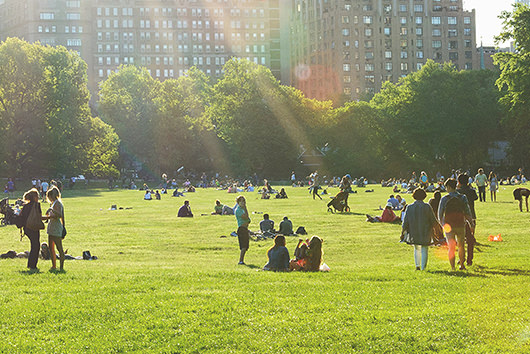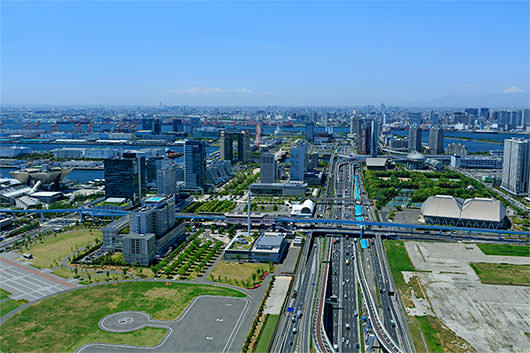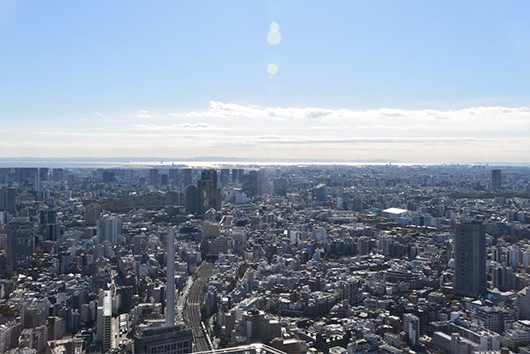

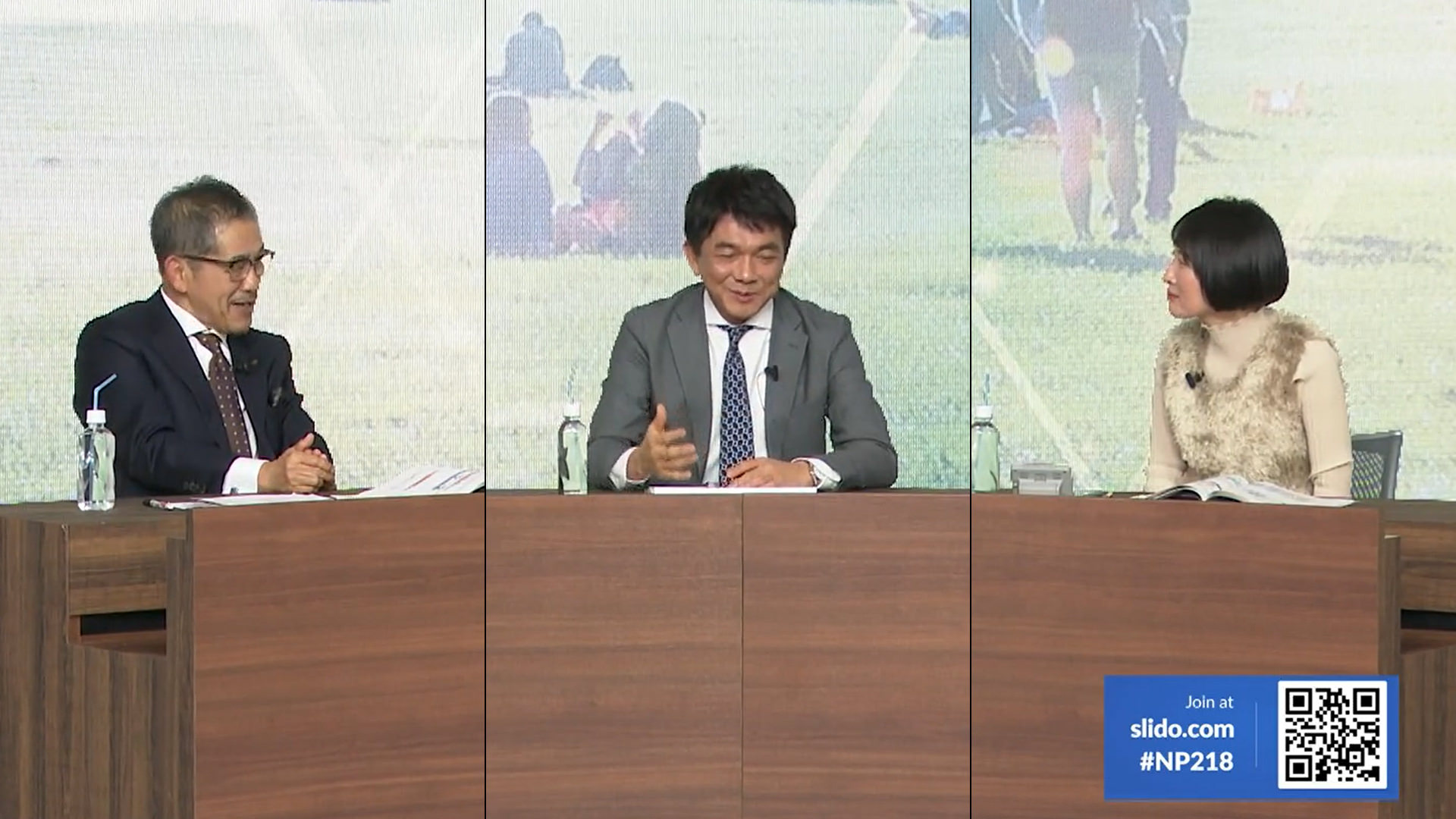
On February 18, 2021, PACIFIC CONSULTANTS and Nikken Sekkei co-hosted an event titled "Prospects for Cities and Regions in the Post-COVID Era." The two companies, which have worked together to solve urban challenges in integrated station-area development (TOD) projects in central Tokyo, such as around Shibuya station, presented directions for the transformations required for cities and regions in the post-COVID era. Part 1 consisted of proposals on "Transformations Required for Cities and Regions, and Future Social Design," based on joint research by young and mid-career working members from PACIFIC CONSULTANTS. Transcending specialized fields such as architecture, urban planning, and social infrastructure, and incorporating multifaceted perspectives including energy and smart technologies, they presented their vision for future autonomous and decentralized cities across eight themes. Part 2 featured a panel discussion with Tomoyuki SHIGENAGA (President and Representative Director, Executive Officer of PACIFIC CONSULTANTS, Atsushi OMATSU (President and Representative Director, Executive Officer of Nikken Sekkei, and Chiaki HAYASHI (Representative Director) of Loftwork, who served as moderator. The discussion begins with the perspectives on urban development shared by the two companies that have collaborated on the Shibuya station area development project.
INDEX
- Work styles are diversifying, and the workplace is becoming a place for communication
- Towards an autonomous, decentralized city that meets the needs of its users
- Towards a sustainable, diverse, and resilient city
Work styles are diversifying, and the workplace is becoming a place for communication
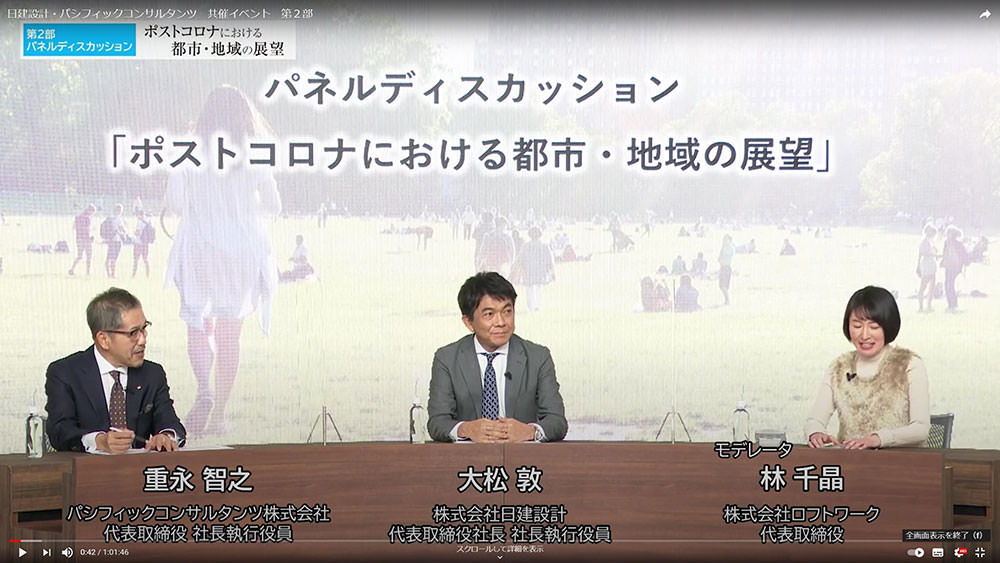
HAYASHI: Why did Nikken Sekkei and PACIFIC CONSULTANTS decide to begin joint research on the post-COVID era?
SHIGENAGA: We have been collaborating with Nikken Sekkei on the Shibuya station area development for nearly 20 years. It started with the undergrounding of the Tokyu Toyoko Line and has been a complex project involving railway rerouting and the redevelopment of the surrounding area. We have both embraced the theme of "how to create a city" and have worked on it beyond the boundaries of architecture and civil engineering. We also started research to think together about the post-COVID era, which has led to this presentation.
OMATSU: In Shibuya, we have shared the challenge from the very beginning of how to make it an attractive city that everyone will love. Now that society is undergoing significant changes due to COVID-19, I thought that by collaborating, we could broaden our perspectives and consider the future direction of urban and regional change.
HAYASHI: What do you think has changed in cities and regions because of COVID-19?
OMATSU: As suggested in the first part, the workplace has changed significantly. People's range of movement has changed, and they are spending more time in their immediate surroundings, not just commuting between the city center and their homes.
HAYASHI: Is it a good thing that people are shifting their workplaces to their homes? Also, what will happen after the coronavirus pandemic subsides?
OMATSU: There are things that are better done face-to-face at the office, such as brainstorming and training young employees, but there are also jobs that can be done remotely. These things have become clear because of COVID-19. The workplace is not limited to home or the office; the possibilities are expanding rapidly, including shared offices around the nearest station, so I don't think the workplace will ever go back to being just the office.
SHIGENAGA: The diversification of work styles has accelerated due to the COVID-19 pandemic. Although our company had a telework system, it had hardly been used until now. However, for people with childcare or eldercare responsibilities, working from home or nearby is more efficient than commuting to the office. Considering the future of society, I think it is important to provide tools such as telework and online capabilities.
HAYASHI: What kind of place do you think companies will become for employees in the future?
OMATSU: I don't think the Headquarters will disappear. I think it's necessary as a place where employees can have fun discussions, a place of belonging, and a way to pass on the organization's DNA, with a lounge where everyone can have fun together.
SHIGENAGA: Humans are animals that need communication, so that's something we have to cherish. Also, because our company handles a lot of public works, we have a somewhat rigid corporate culture. There are physical constraints, such as printing blueprints, so not everything can be done remotely. However, I think we won't have to prepare a desk and chair for every employee anymore.
OMATSU: I agree that direct communication is important in the workplace. In the Shibuya station area development project, I think we were able to effectively define each other's roles and responsibilities by having face-to-face meetings with stakeholders several times a week.
Towards an autonomous, decentralized city that meets the needs of its users
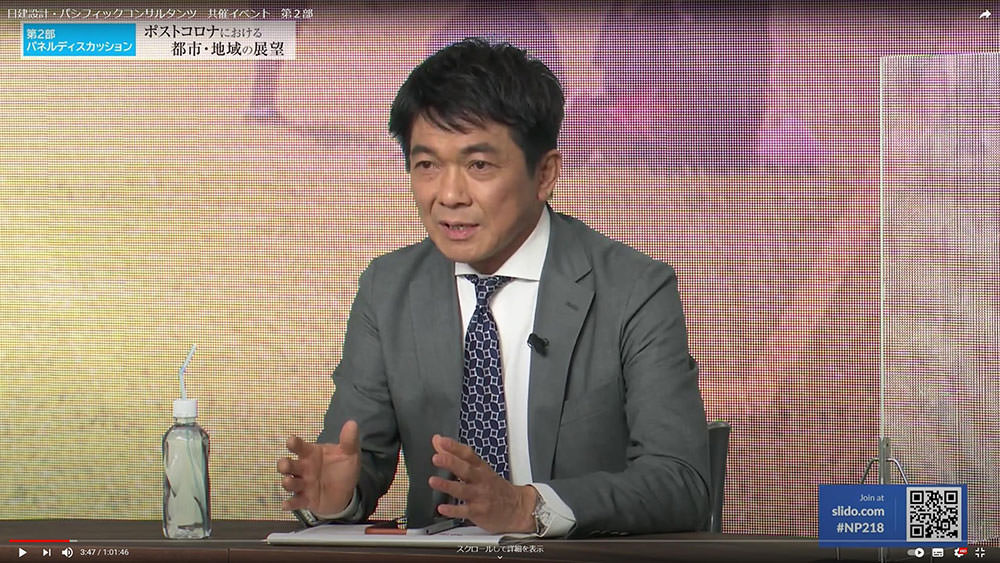
HAYASHI: In the first part of the proposals, there was a concept for public spaces that utilize roads as public spaces for multiple purposes. What will happen to proposals for the use of public spaces and the entities that will be responsible for them in the future?
OMATSU: Up until now, these spaces have been created and managed by the government, but I think it would be good to have a system that is user-oriented and can understand the needs of the users. At Kitaya Park in Shibuya Ward, several private companies, including Nikken Sekkei, have created a system to redevelop and manage the park. I think we will see more examples in the future of private companies operating public spaces that are better suited to their needs.
HAYASHI: I think it will become possible to make proposals and so on using smartphone apps and the like in the future. There's also the possibility that urban spaces and apps will become even more closely intertwined in the future.
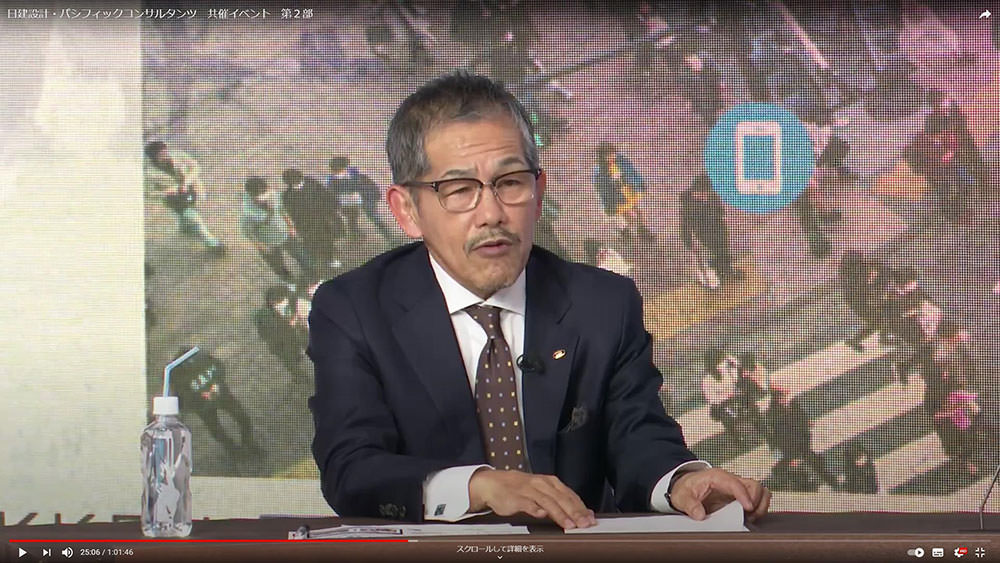
OMATSU: That's right. Crowdfunding is on the rise, so I think the day when we can utilize such mechanisms in parks is not far off. As for apps, it will become possible to grasp in real time where there are people, how many people are there, and what activities are taking place, and to utilize that information.
SHIGENAGA: I believe that being able to dynamically understand people's movements will lead to the creation of better spaces. Since December of last year, we have been collaborating with SoftBank Corp. to create statistical data called "Nation-Wide Movement Statistics" regarding people's movements. This data allows us to estimate what means of transportation and travel routes people are using, and we offer it for a fee. By using this data, we can understand the purpose of people's movements and the facilities they need, and I believe that this, along with infrastructure data, can be fed back into urban spaces.
HAYASHI: What do you think will happen to public spaces in rural areas in the future?
SHIGENAGA: This isn't limited to rural areas, but I think it's necessary to create public facilities with disaster prevention in mind. For example, "Roadside Station Mutsuzawa Tsudoi-no-Sato" and "Mutsuzawa Smart Wellness Town," which we operate in Mutsuzawa Town, Chiba Prefecture, and consists of town-owned housing, have introduced a co-energy system using natural gas to supply electricity to the hot spring facilities and residences via a microgrid. When the surrounding area lost power during Typhoon Hagibis two years ago, this place alone was able to receive electricity, and it attracted a lot of attention.
OMATSU: That's local production and consumption of energy.
SHIGENAGA: Up until now, we've had to stretch transmission lines from distant power plants, but there are transmission losses, and with the possibility of small-scale wind power generation, I think energy will become more autonomous and decentralized.
OMATSU: So, instead of having production bases in rural areas to support the over-centralization of production, we need autonomous decentralization. Regarding logistics, if we only rely on the economic rationality that it's cheaper to produce in a certain area, it becomes inconvenient when transportation networks fail and logistics are disrupted. That became clear during the pandemic.
HAYASHI: Up until now, GDP has been one indicator, but will we move towards emphasizing Gross National Happiness (GNH) and other metrics?
OMATSU: We are trying to improve society by creating architecture and cities, so it would be good if we could get indicators that are directly linked to the results of that work.
SHIGENAGA: In recent terms, it might be called "wealth," but the indicators for that are becoming more diverse. In this context, we want to aim for Japan to be a country that is easy to live in. To achieve that, "cities" are extremely important, and we need to seriously consider what kind of cities we should create.
Towards a sustainable, diverse, and resilient city
HAYASHI: Japan is often said to be a leading country in disaster prevention. Could you tell us about the knowledge that has been accumulated so far regarding disaster prevention and recovery?
SHIGENAGA: Japan experiences a great many natural disasters, but if we try to accept all of them and eliminate all risk, we would need something enormous. Rather than confronting them head-on, we have no choice but to coexist with them by letting them slip away to the side. In the reconstruction after Great East Japan Earthquake, we aimed to create a city that avoided excessive defensive measures. At that time, cooperation that transcended the previous vertical divisions became the key. For example, levees are built by river administration, but there is a city beyond them, so river administration and urban planning should be considered as one entity. I think that kind of initiative has finally begun.
Furthermore, and this relates to the use of public spaces, there is a growing trend towards developing these spaces so that they can be effectively utilized by the private sector during normal times and function as disaster prevention bases during emergencies.
OMATSU: It's difficult to protect everything from unforeseen disasters, so it's essential to reach a solid consensus on what to protect for disaster mitigation and prevention.
HAYASHI: How do you decide what to protect and what not to protect?
OMATSU: Of course, we must protect human lives. In addition to that, for example in Tokyo, we need to protect the functions that the capital city performs. To do that, if we distribute those functions to several locations, even if the city center is hit by a disaster, functions such as disseminating information to the world and receiving aid will continue to operate.
SHIGENAGA: Tokyo has various functions that need to be protected, such as administration and finance. If these functions are lost due to a disaster, it will cause great chaos, so we need to think about the city's business continuity plan (BCP).
Even outside the capital city, resilience to disasters is necessary. It is important to have concrete discussions in each region about what the minimum necessities must be protected in each town.
HAYASHI: Up until now, centralization has been considered efficient, and it was thought that work would be more productive if everyone gathered in the office. Is it new technology that has made decentralization possible?
OMATSU: While technology plays a role, I think the vision of society we are aiming for is changing.
We experienced the collapse of the bubble economy, and the direction society is heading in clearly changed before and after that. I believe a similar change will occur in the future after the COVID-19 pandemic.
HAYASHI: E-commerce has been growing since the pandemic. As various things become digitized and move to the cloud, will comfort and preferred locations become more important and influence choices?
SHIGENAGA: With the changes in people's movements due to COVID-19, cities will need to be able to adapt. As you mentioned, IT technology is necessary for that. Another thing is that cities need to be unique. Right now, no matter where you go in the country, you'll find similar layouts and similar shops. We need to think about urban development that takes into account the characteristics of each city. I think that through inter-city competition, cities will be created where people can experience the unique individuality of each city.
OMATSU: I think it's like the city, which was previously monochromatic, is becoming colorful.
HAYASHI: Finally, could you please give us a concluding remark for today?
SHIGENAGA: I think it all boils down to the importance of communication between people. I want to continue working on community development that focuses on that.
OMATSU: Today, I felt a sense of potential that exceeded my expectations. I want to create a fascinating new society through co-creation, including with everyone who participated.
■ Answers to questions that could not be addressed on the day (Slido) (PDF/230KB)
◆ Pacific Consultants YouTube Channel (Videos)
Part 1: "Transformations Required in Cities and Regions, and the Future of Social Design" - Research and Recommendations by Working Members from Both Companies -
Part 2: Panel Discussion "Prospects for Cities and Regions in the Post-COVID Era"